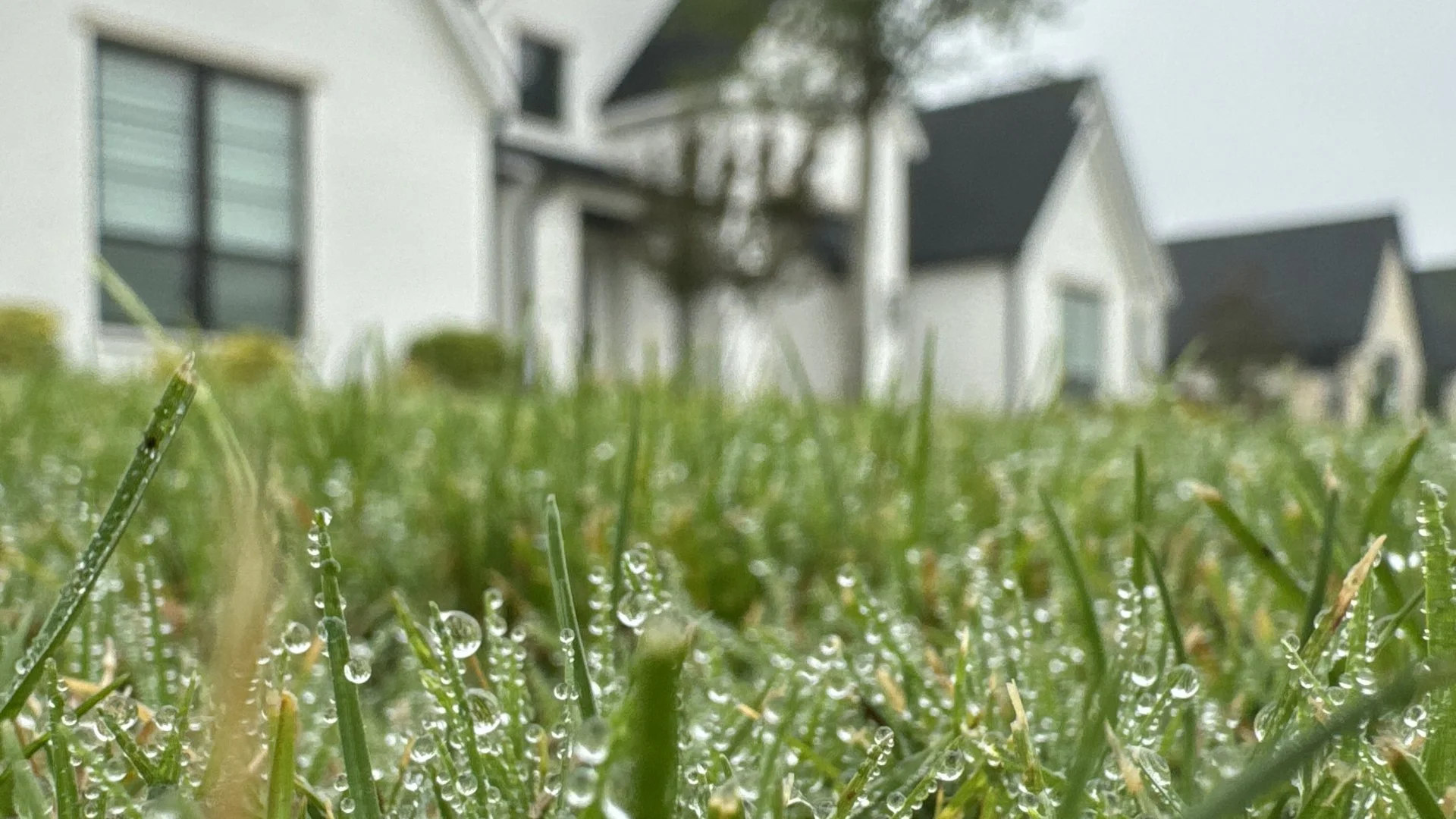
Peak summer afternoons across North Texas often bring a short, hard storm after days of dry clay. The rain looks generous for twenty minutes, then the sky clears and the heat returns. On many lots the water does not soak evenly. It sits in thin ribbons along sidewalks, fence toes, patio edges, and low bowls in the turf. Homeowners in Plano, Arlington, and nearby cities see the same pattern: dry crust, brief downpour, then shiny lines of water that linger while the rest of the lawn looks thirsty again by evening.
This is not a vacation timer story. It is what happens when compacted clay sheds a fast storm before roots can use it. Understanding those ribbons helps you decide whether to hold irrigation, watch for mosquito corners, or ask for lawn and drainage advice before the next heat spike. The goal is a clearer read of your soil and slopes, not a longer sprinkler schedule by default.
Why dry clay then a short storm leaves ribbons
North Texas clay holds moisture once it is wet, yet the surface can seal when heat bakes the top inch. A brief storm hits that crust hard. Water runs sideways toward the nearest low line instead of sinking straight down. Sidewalks, patio slabs, and compacted gate paths act like funnels. You end up with narrow wet bands beside dry centers, which confuses anyone who only checks one spot with a screwdriver.
Warm season grass still needs deep moisture in peak heat, but flooding the same ribbon every night trains roots to stay shallow in the wet strip while the open lawn stays stressed. Our guide on how much and when to water in Dallas and Fort Worth still applies: aim for weekly totals that include rain, not automatic daily misting that ignores what the storm already left behind. Cycle and soak on clay often beats one long run that sheets into the street.
Wind after a storm also pulls moisture off leaf blades faster than the soil profile suggests. That is why a lawn can look dull by dusk even when ribbons still shine along the patio. Treat the ribbon as a drainage clue and the open canopy as a separate moisture check before you change the controller.
What those ribbons mean for turf and insects
Standing ribbons after a short storm are a drainage and soil story first. They can also create mosquito resting and breeding corners in plant saucers, toy bins, and clogged gutters that share the same low edge. If dusk bites spike after storm days, read mosquito control and clear containers that hold water for more than a day. Fire ants sometimes push fresh soil in sunny edges once the surface softens, so mark new mounds and review fire ant control when activity sits in play strips.
Turf in the ribbon may look greener for a day, then yellow if roots sit in water while heat returns. Thin footprints that stay pressed in the dry center often point to heat stress or insects rather than a need for more nightly water. Pair visual clues with lawn insect control before you add another product. Birds working the same strip each morning are another reason to look below the canopy instead of only at the shiny edge.
Practical checks after the next afternoon storm
Walk the yard once the rain stops and once more the next morning. Photograph ribbons that still shine after twelve hours. Note whether sprinkler heads throw into the same low lines. Lift a corner of sod in a dry center and a wet ribbon to compare moisture depth. If water sheets off every time, ask about core aeration as part of a longer lawn care plan so openings help future storms soak instead of skate.
For puddles that sit for days rather than thin ribbons that fade overnight, our article on puddles that sit for days covers bigger drainage moves. Keep the two problems separate so you do not treat a short storm ribbon like a permanent pond. A ribbon that vanishes by morning after you skip irrigation is often a success signal, not a reason to water again at dusk.
How SureGuard fits the pattern
SureGuard teams see storm ribbons on clay lots across Dallas Fort Worth, Waco, Cedar Creek, and Mabank every peak summer. We help homeowners line up turf programs, mosquito and fire ant service, and honest watering habits without treating every shiny strip as the same problem. If you are still sorting which symptom leads, take the peak summer yard symptom quiz. For a broader seasonal map of lawn and foundation edges, use the peak summer lawn and perimeter guide.
When you want eyes on your exact slopes, heads, and grass type, contact SureGuard. Bring storm photos and a note of how long ribbons last. That detail helps us talk through irrigation holds, aeration timing, and pest pressure in the same conversation.