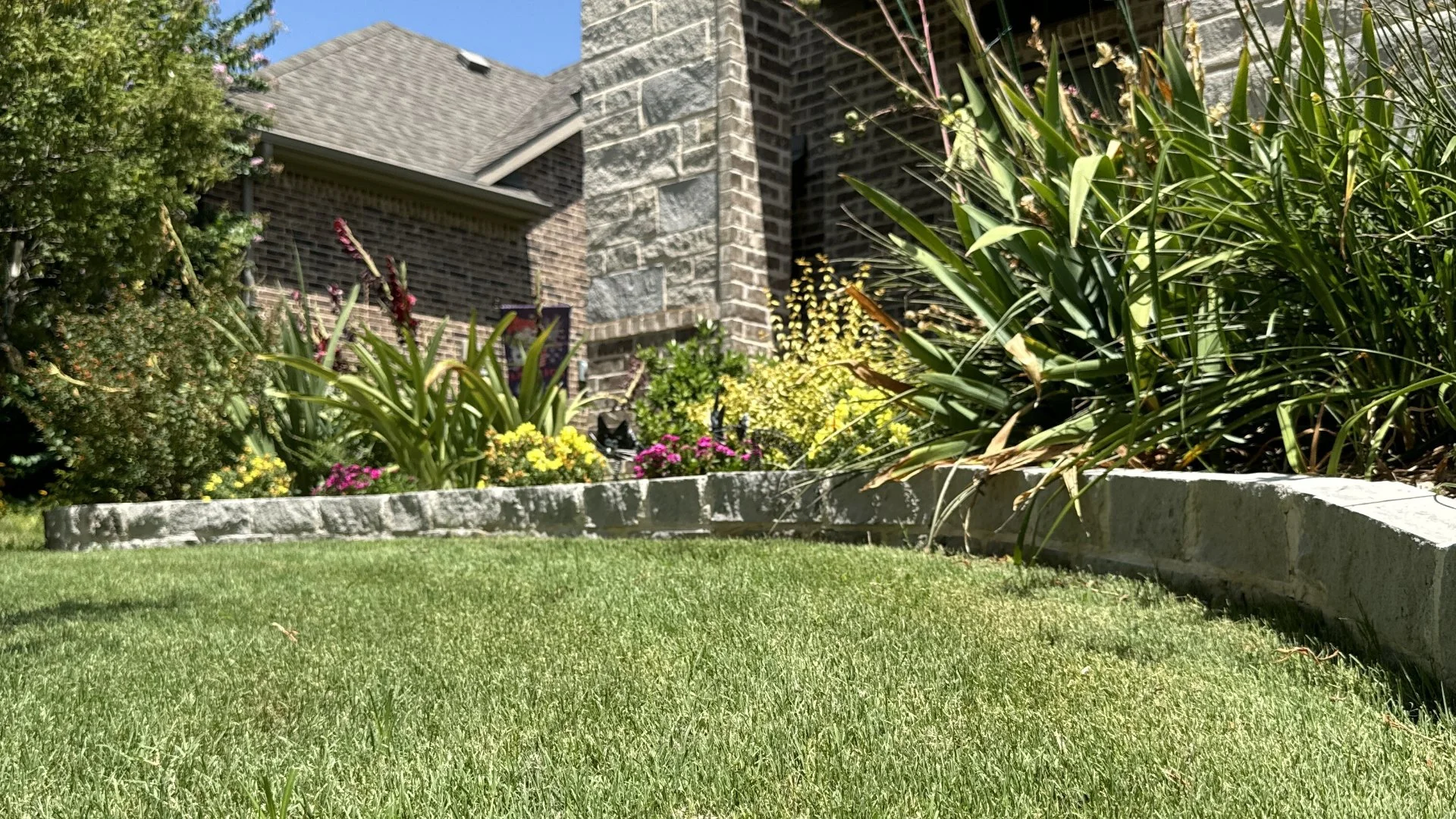
Most people begin researching evaluating turf after summer stress because of something they have noticed in everyday use. It may be a recurring inconvenience, a visible change, or a project that raises new questions. North Texas heat can leave lawns with similar surface color but very different recovery potential. You do not need to know the technical answer before starting the conversation. A clear description of what is happening and what you hope to improve gives us a useful starting point.
A thin, brown, or uneven area of turf can have more than one cause. Looking at root strength, soil moisture, and irrigation coverage helps separate the visible pattern from the conditions below and around it. Recent weather, mowing, watering, and earlier treatments add context. The goal is to avoid treating one possibility while a different issue continues to stress the lawn.
The review should also include traffic, insect evidence, and living crowns and runners. These details can make damage look worse, slow recovery, or create a pattern that resembles insects or disease. Considering them does not mean every lawn problem has a long list of causes. It simply helps make sure the treatment matches what the turf is actually experiencing.
It is easy to begin with the assumption that assuming every brown area will respond to fertilizer is enough. Sometimes that first thought will prove correct, but it should still fit what is happening across root strength, soil moisture, and irrigation coverage. Checking those details keeps a familiar explanation from overshadowing the condition that brought you here in the first place.
A Common Question
Take a few close photos and one wider photo before changing mowing, watering, or treatment. The wider view helps show the pattern, while the close view preserves leaf and soil details. You do not need a formal report. A few clear notes or photos related to root strength, soil moisture, and irrigation coverage can make the first conversation far more useful.
Access can be just as important as the condition itself. If stored items, furniture, landscaping, tenant schedules, building rules, or another project affect the area, mention that before the property visit. It gives us a realistic plan for reaching the work and helps avoid a return visit that was needed only because an important area was unavailable. When reviewing evaluating turf after summer stress, keep any follow-up tied to a clear change involving living crowns and runners.
Ultimately, you are deciding which areas can recover with cultural care and which need repair or replacement. One option may address the immediate need, while another may coordinate work that would be harder to revisit later. The better choice depends on your priorities, timing, and how long you expect the current setup to remain in use. The explanation should make those tradeoffs clear without assuming the larger option is automatically the right one.
Before deciding, ask what was learned from root strength, why soil moisture matters, and whether the situation involving living crowns and runners changes the timing or follow-up. These are not technical questions. They are a simple way to make sure the recommendation addresses the issue you noticed and not just the easiest work to propose.
Sometimes the most useful finding is that one part of the lawn is not contributing to the concern. That can remove an unnecessary step and make the remaining recommendation easier to understand. Helpful service should reduce uncertainty, not create a new worry around every component or area.
Our approach to evaluating turf after summer stress is straightforward: understand the goal, inspect or plan around the details that matter, and explain the options without adding unnecessary work. We will also point out which parts of the lawn can remain exactly as they are. That gives you a clearer picture of both the recommendation and its limits.
You do not need to become an expert in evaluating turf after summer stress before asking for help. Start with the way your lawn is used and the change you want to see. From there, details such as root strength, soil moisture, and irrigation coverage can be put into context and turned into a plan that is understandable, useful, and appropriate for your lawn.