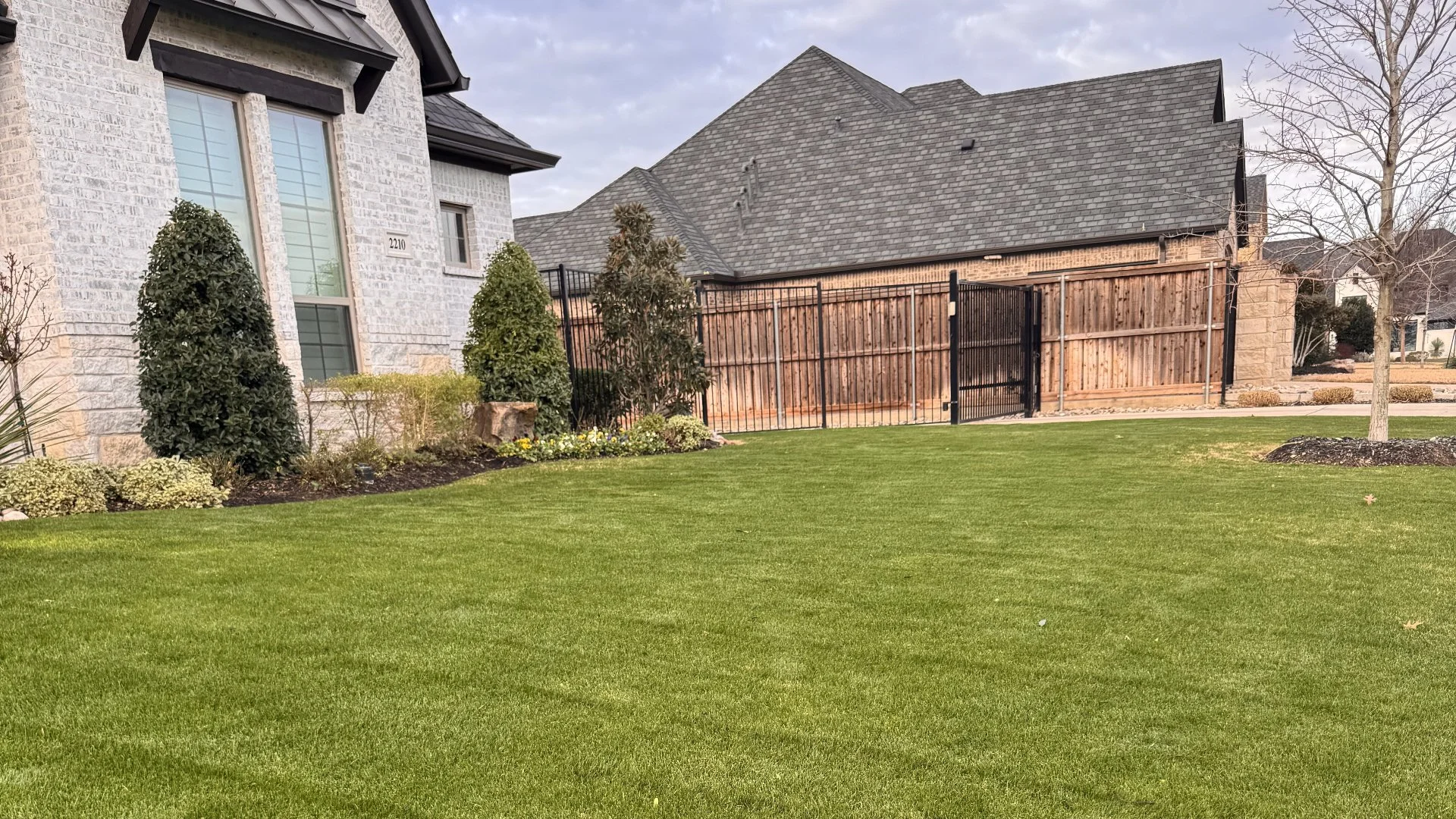
Early summer around McKinney, Arlington, and Waco delivers a narrow window when warm season turf still recovers from spring traffic yet peak heat has not locked every decision. Most homeowners do not need another generic checklist from a national forum. They need one honest route that reads turf, water, perimeter pests, and entry shrubs in the order a technician would cross the lot. This guide sequences that walk for Dallas Fort Worth area homes and nearby communities we serve, including Cedar Creek and Mabank.
Step one: open lawn in morning light
Start in the open yard before furniture and shadows confuse color. Look for thin stripes beside pavement, chewed blade tips, and zones that pull like loose carpet. Photograph one healthy stripe and one weak stripe from the same angle. Grass type matters: Bermuda in full sun and Saint Augustine in afternoon shade fail for different reasons on the same address.
Read warm season lawn insect signals before summer heat when subsurface feeders or chinch edges may be staging. Service context lives on lawn care and lawn insect control when scouting belongs on the ticket with feeding and weed work.
Step two: water clues at downspouts and low bowls
Walk every downspout outlet and low corner where clay holds water after storms. Feel for squish along north faces and strips under mature trees. If shoes pick up mud while the driveway strip looks dry, the clock and the soil disagree. Note clogged heads and misaimed nozzles before you blame turf alone.
Read how much and when to water your lawn in Dallas and Fort Worth before you extend runtimes for peak heat. Pair soggy corners with puddles that sit for days when drainage edits belong beside irrigation tweaks. Review early summer irrigation skip guide when radar already delivered more than the timer should add.
Step three: fence lines dog paths and tall borders
Mow rhythm often lags on fence lines, easements, and trampoline skirts. Tall borders behave like separate habitat for chiggers and ticks even when the front stripe looks ready for photos. Walk those corners with closed shoes and note height beside greenbelts or vacant lots.
Read chigger season tall grass and fence lines and ticks along fences and property lines on the same lap. Open chigger control and tick control when border pressure outpaces DIY trimming.
Step four: perimeter pests at the stem wall
Move along the foundation with mulch pulled back from siding. Note weep holes covered by soil, ant trails at slab edges, spider silk under eaves, and fire ant domes near sunny grill pads. Wipe grill drips and seal trash before you call those signals permanent.
Compare notes with guest week perimeter prep checklist and fire ant mounds after spring rain. Service routes live on perimeter pest control, fire ant control, and the wider pest control menu.
Step five: standing water and evening biting pressure
Lift splash blocks, flip buckets, and check saucers under pots on the porch. Mosquitoes need small quiet water more than a pond. Walk the same route ten minutes after sunset once a week to catch condensate drips morning rush misses.
Read mosquito breeding sites after spring rains when habitat edits are not enough. Review mosquito control when adults spike beside the same soggy corners you noted in step two.
Step six: entry shrubs airflow and mulch depth
Guests read entry shrubs before they comment on turf. Boxwood corners that touch rails, mulch volcanoes against brick, and interior canopies that never see light all change how dew lingers beside the door. Light thinning that opens the interior often beats a heavy shear the week before traffic returns.
Explore tree and shrub care when woody plants look weaker than grass. Read late spring shrub airflow story for porch meeting heat context. Pair shrub work with weed control when beds and turf compete for the same weekend attention.
Step seven: compaction and aeration candidates
Press your heel along patio lanes, side gates, and play structure skirts. Clay that packs under feet stays soft below while the surface looks dry. Mark those lanes for mechanical relief instead of another product bag when roots need air.
Read spring guide to core aeration and open core aeration when traffic paths need channels before peak heat. If thatch was already talking earlier in the year, revisit Bermuda thatch signals in North Texas yards so aeration timing respects canopy depth.
Step eight: compile photos and one priority
End with three photos: one turf stripe, one perimeter corner, and one water or shrub issue. Send them with your town through contact and name the weekend that matters. Ask for one coordinated plan when lawn, pest, and shrub clues stacked on the same walk.
This sequence supports your notes. It does not replace licensed inspection when electrical, structural, or drainage risk feels uncertain. Early summer rewards walks that happen before every stripe looks tired at once during peak heat.
Repeat the same route after the next storm. Habits that take twenty minutes prevent the Friday scramble before guests arrive.
Write which zones you skipped after rain so later heat decisions start from facts instead of memory.
Pool decks and stone paths reflect heat onto adjacent turf. Note those margins in step one so sun and traffic stay on one ticket.
When several worries fire at once, tell your provider where probes found larvae, where fence grass stayed tall, and which downspout still splashes toward the stem wall.
Saint Augustine in shade may stay dark green while Bermuda beside the walk looks gray after the same rain. Split decisions by zone instead of one global fix.
Lawn fertilization should follow mapped growth and insect pressure, not panic after a single hot afternoon.
Bring dogs, pool decks, and trampoline skirts into your notes when you call. Traffic and shade change how warm season turf fails on the same lot where the front stripe still photographs well from the street.
Controller batteries and rain sensor caps deserve a glance during step two even when no zone looks dramatic yet. Small hardware faults become loud problems once peak heat removes the margin for error.
Repeat this walk after guests leave and after the next storm. The same eight steps take less time the second pass because you already know where the lot hides its honest signals.