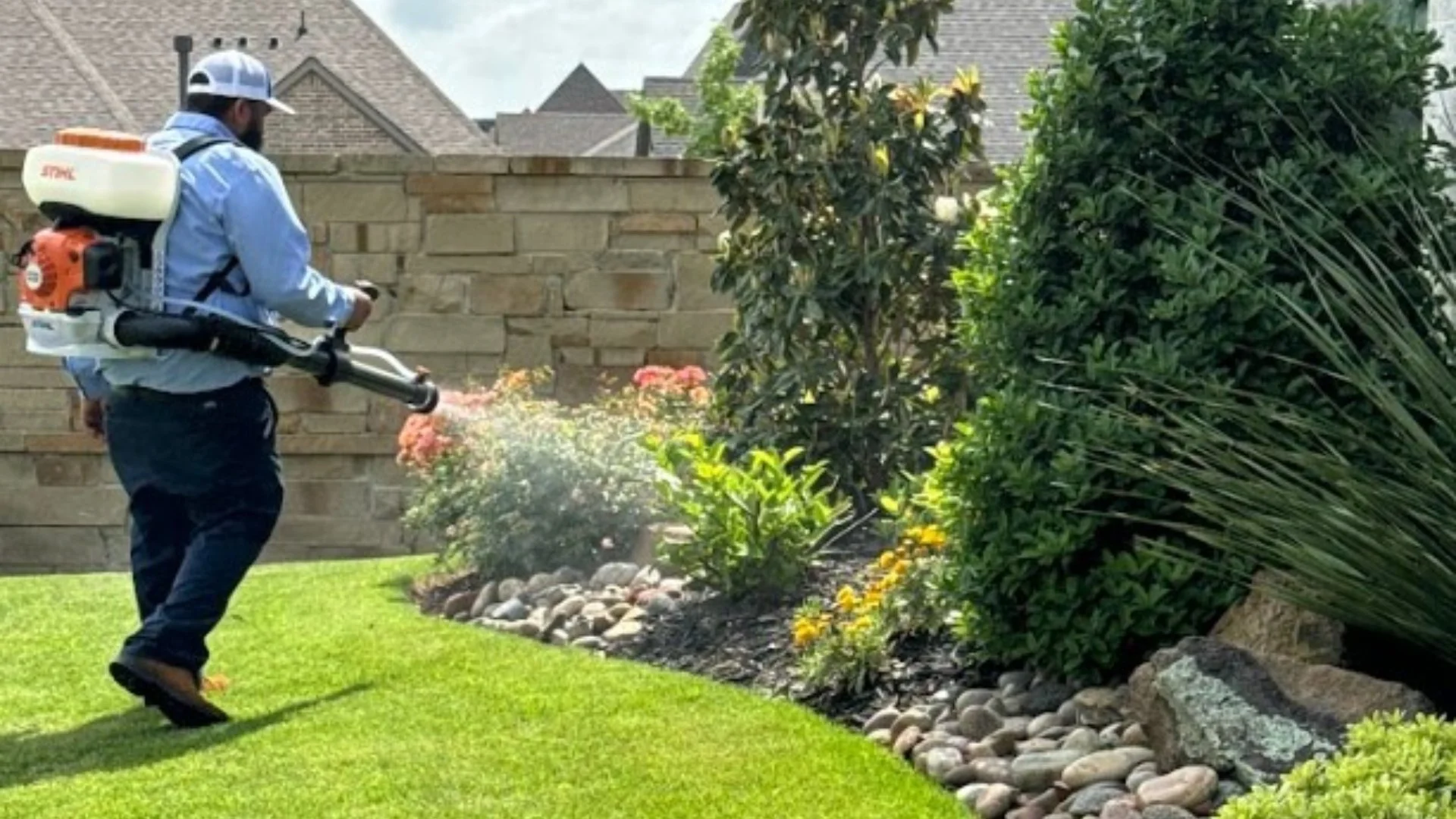
If you are thinking about coordinating irrigation and exterior pest service, there is probably a practical reason behind it. Something may not be working the way you expect, or you may be planning ahead before a repair, renovation, seasonal change, or busy period. DFW irrigation cycles often run overnight, when the conflict may not be obvious during daytime service. The most helpful place to begin is with what you want the finished result to do for your lawn, then look at the details that can affect that result.
A thin, brown, or uneven area of turf can have more than one cause. Looking at sprinkler timing, overspray, and foundation drainage helps separate the visible pattern from the conditions below and around it. Recent weather, mowing, watering, and earlier treatments add context. The goal is to avoid treating one possibility while a different issue continues to stress the lawn.
The review should also include mulch moisture, service date, and entry point repairs. These details can make damage look worse, slow recovery, or create a pattern that resembles insects or disease. Considering them does not mean every lawn problem has a long list of causes. It simply helps make sure the treatment matches what the turf is actually experiencing.
A tempting first answer is applying service immediately before routine irrigation without coordinating the schedule. The problem is not that this is always wrong. It is that the answer can be incomplete when the surrounding setup tells a different story. A little context makes it easier to keep a focused job focused and recognize when another detail truly changes the plan.
Take a few close photos and one wider photo before changing mowing, watering, or treatment. The wider view helps show the pattern, while the close view preserves leaf and soil details. You do not need a formal report. A few clear notes or photos related to sprinkler timing, overspray, and foundation drainage can make the first conversation far more useful.
Before You Schedule Service
It is also useful to talk about what happens after the work. Ask what a normal result should look like, what you can watch for, and whether a follow-up depends on weather, regular use, or another season. That gives you a practical way to judge the result without making you responsible for performing a technical inspection. When reviewing coordinating irrigation and exterior pest service, keep any follow-up tied to a clear change involving entry point repairs.
Ultimately, you are deciding how watering, treatment timing, and moisture correction can support the perimeter plan. One option may address the immediate need, while another may coordinate work that would be harder to revisit later. The better choice depends on your priorities, timing, and how long you expect the current setup to remain in use. The explanation should make those tradeoffs clear without assuming the larger option is automatically the right one.
Before deciding, ask what was learned from sprinkler timing, why overspray matters, and whether the situation involving entry point repairs changes the timing or follow-up. These are not technical questions. They are a simple way to make sure the recommendation addresses the issue you noticed and not just the easiest work to propose.
It is equally important to know what does not need to change. The review may confirm that part of the lawn can remain as it is or that a nearby condition is unrelated. That is useful information. A good visit should narrow the concern and keep the recommendation proportional rather than turning every observation into another service or upgrade.
During the property visit, we keep the conversation centered on the reason you reached out. We will explain what we can confirm, what may need another step, and how the recommendation connects to your everyday use of the lawn. The goal is for you to understand the plan without needing technical vocabulary to evaluate it.
You do not need to become an expert in coordinating irrigation and exterior pest service before asking for help. Start with the way your lawn is used and the change you want to see. From there, details such as sprinkler timing, overspray, and foundation drainage can be put into context and turned into a plan that is understandable, useful, and appropriate for your lawn.