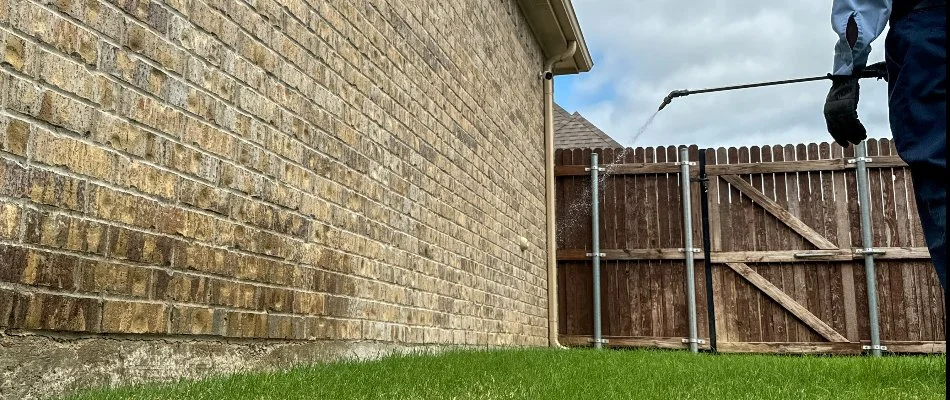
Scorpion Sightings in New Construction Landscaping
Freshly graded lots in Frisco, Celina, and north Fort Worth corridors expose scorpions that lived under slab debris, caliche, and irrigation trenches during build months.
This article ties landscape staging, retaining rock, and perimeter pest control response to how families use patios before predator balance returns on young lots.
Why new landscapes flush scorpions toward patios
Scorpions favor cool voids under flagstone, rip rap, and bender board before sod covers disturbed soil. Daytime heat pushes them toward shade at patio footings and garage thresholds.
Landscapers often stockpile rock and soil beside the slab during the final weeks before move-in. That staging creates temporary harborages five feet from the back door children use daily.
Sightings spike in the first sixty days after certificate of occupancy, not because populations exploded, but because cover was removed and foot traffic crosses former refuges.
Rock beds, weed fabric, and moisture traps
Decorative river rock over weed fabric holds afternoon heat and evening humidity on North Texas exposures. Scorpions use those beds beside foundation drips while irrigation establishes.
Overspray from new sod zones can keep rock rings damp at dawn. Note which beds stay wet beside weep holes before assuming sightings are random.
Pull fabric edges back during a daytime walk and look for shed skins and crushed tunnel lines. Those signs help technicians focus treatment off open Bermuda where predators hunt more openly.
Stucco leach fields and construction debris
Fresh stucco piles and mortar buckets left against fence lines hold moisture and insects scorpions feed on. Cleanup before move-in matters as much as perimeter spray.
Wood form stakes and banding straps buried shallow during rough grading become harborage when topsoil is thin. Remove buried debris before laying mulch against the slab.
Pair landscape completion with pest control walk focused on first ten feet from the foundation, not only fence corners far from living space.
Pool cages, drains, and night lighting
New pool installations leave deck drains and cage footings that scorpions use at night. LED uplights against fresh stucco draw insects, then scorpions follow the feed line.
Turn off unnecessary accent lights for the first weeks after move-in while habitat settles. Keep doors swept and garage thresholds sealed so patio traffic does not pull activity indoors.
Teach children to shake shoes and slide-on footwear before entry on new lots where rock beds sit beside the kitchen door.
What treatment should name on young lots
Licensed perimeter pest control work should list rock beds, fence debris fields, and retaining walls separately from standard foundation band treatment.
Interior garage treatments belong on the plan when sightings track cool slab edges at dawn. Blanket attic promises rarely match how scorpions use new landscapes at grade.
Revisit thirty days after initial service when irrigation curves stabilize and sod rooting changes soil moisture. First-visit results on clay new builds often shift when controllers stop overwatering.
Lawn establishment and long-term habitat
As lawn care programs thicken Bermuda, open hunting for birds and lizards improves. Maintain mowed margins beside rock so predators can work day edges.
Avoid stacking firewood or paver samples against fresh stucco for the first season. Those piles recreate construction harborages after the builder left.
Send lot photos and irrigation schedule through contact us when sightings cluster on one elevation. SureGuard maps new construction pressure before generic perimeter templates.
Clay soil, fence lines, and irrigation habits on North Texas lots change how the same pest sign should be interpreted across Plano, Frisco, McKinney, Arlington, and Fort Worth. Record moisture, traffic paths, and recent landscape work before the service plan is set.
Clay soil, fence lines, and irrigation habits on North Texas lots change how the same pest sign should be interpreted across Plano, Frisco, McKinney, Arlington, and Fort Worth. Record moisture, traffic paths, and recent landscape work before the service plan is set.
Clay soil, fence lines, and irrigation habits on North Texas lots change how the same pest sign should be interpreted across Plano, Frisco, McKinney, Arlington, and Fort Worth. Record moisture, traffic paths, and recent landscape work before the service plan is set.
Clay soil, fence lines, and irrigation habits on North Texas lots change how the same pest sign should be interpreted across Plano, Frisco, McKinney, Arlington, and Fort Worth. Record moisture, traffic paths, and recent landscape work before the service plan is set.
Disclaimer: This article is for general informational purposes only. It is not professional advice, a quote, or a service agreement. Conditions at your home or property may differ; contact a qualified professional for an on-site evaluation before making repair, safety, or spending decisions.