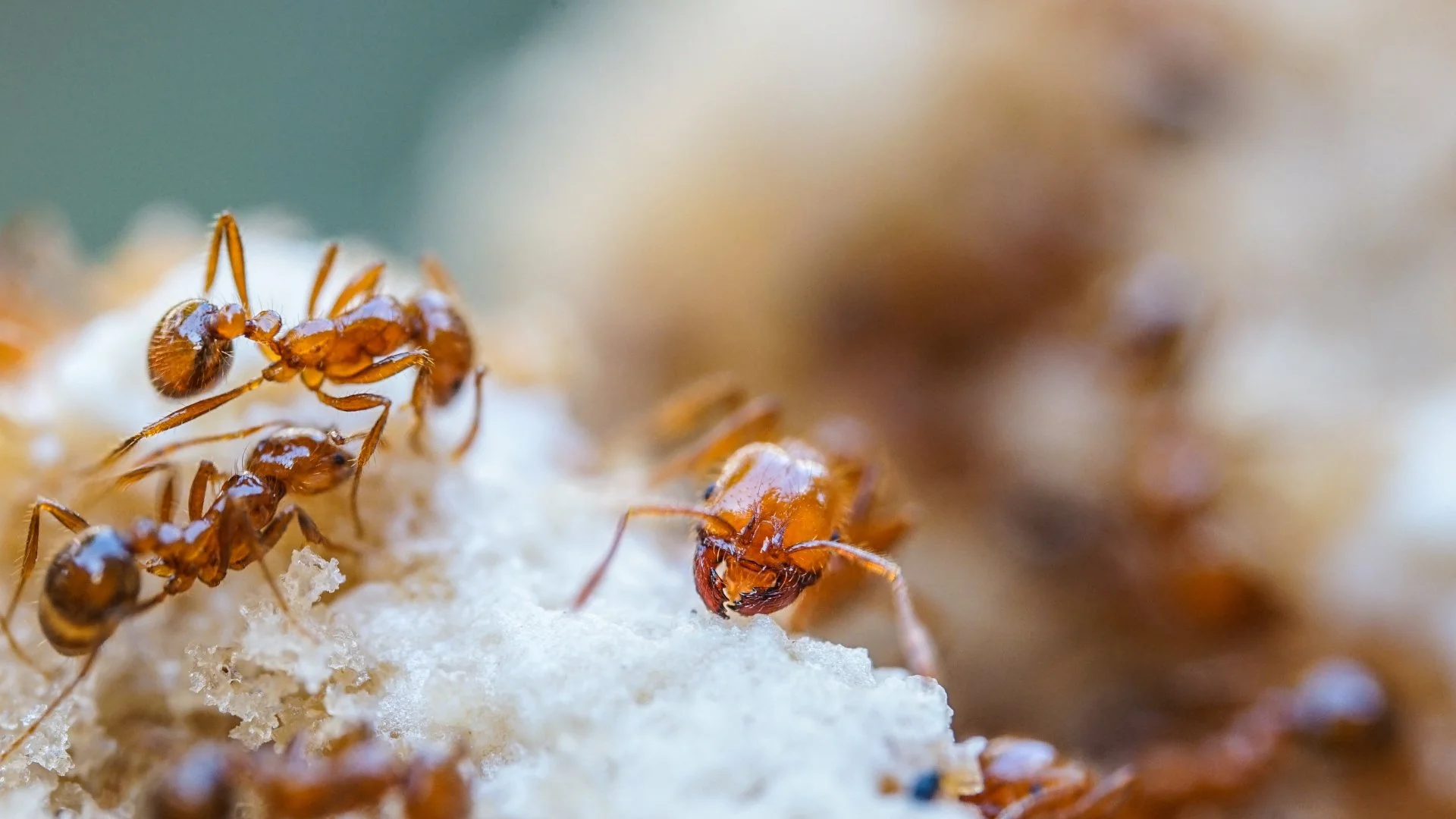
Fire ant mounds near sidewalks, play sets, and garden beds can ruin an otherwise usable yard. In Dallas and Plano, colonies often start small in late winter and expand unnoticed until domes appear after rain. Scratching one mound with a shovel rarely ends the problem because queens and tunnels spread wider than the visible pile. A structured fire ant program uses baits and labeled contact products when ants are actively foraging.
Spotting early season activity
Look for fresh soil pellets in sunny areas, along curbs, and near irrigation leaks. New colonies may not build tall mounds immediately. Mark where you see activity and note dates for your technician. Photos help track whether treatments are reducing foraging over several weeks.
How baits fit the plan
Granular baits work when worker ants collect particles and carry them back to the colony. Temperature and moisture affect uptake, so broadcast timing should follow local conditions, not a generic national chart. Professional grade products and calibrated spreaders improve coverage compared with leftover half bags from last year.
SureGuard offers fire ant control as part of lawn and perimeter plans. Pair this article with early season fire ant control and mounds after spring rain for timing through the year. The full pest control menu covers interior and exterior needs when ants are not the only issue.
Perimeter and neighbor pressure
Colonies travel from adjacent lots. Regular service through the warm months usually manages rebound better than one treatment. Perimeter applications along foundations can reduce ants staging near doors and patios when combined with yard broadcast work. Keep mulch and stored soil off direct contact with siding to limit easy bridges.
Schedule service
SureGuard serves Dallas, Plano, Fort Worth, and communities across North Texas. Contact us to start fire ant control before mounds multiply across your lawn.