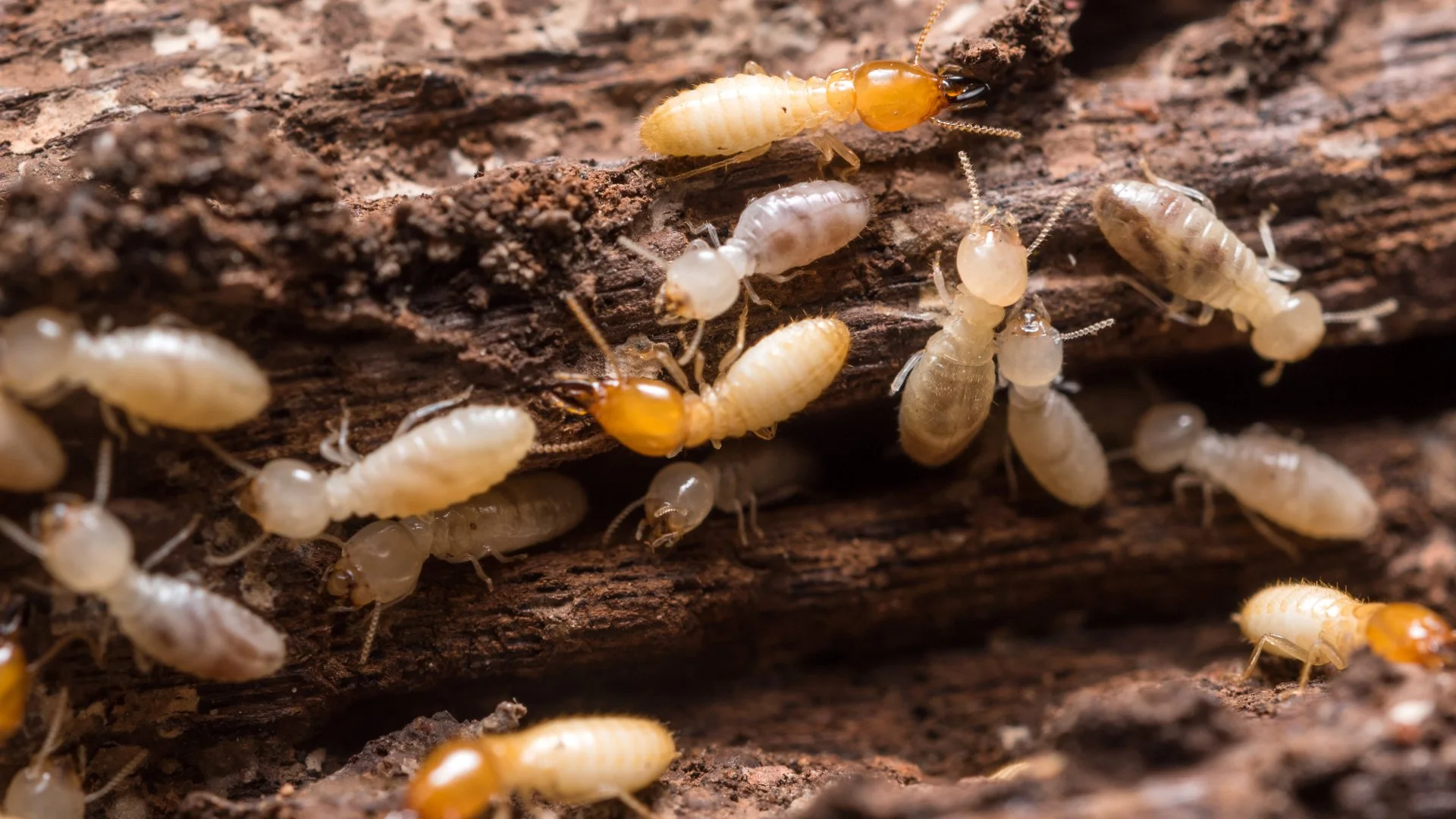
Subterranean Termite Bait Stations Near Downspouts
Downspout discharge concentrates moisture against foundation walls on clay lots throughout Arlington, Mesquite, and southern Fort Worth. Termite foraging often tracks that band before it shows on drier front-yard soil.
This article explains how termite control monitoring near downspouts should read grading, splash blocks, and bait station access without confusing seasonal saturation with colony pressure.
Why downspout zones differ from open turf
Clay soils hold water against the foundation when downspouts drop without extension or when splash blocks tilt toward the slab. That stripe stays cool and workable longer than sun-facing Bermuda in July.
Subterranean termites forage in soil that stays connective to foundation wood. A wet band beside the downspout is often the first map point on homes with otherwise average moisture readings mid-yard.
Walk the foundation after rain and mark every downspout plume. Compare those marks to bait station locations on the same elevation drawing.
Splash erosion and station stability
North Texas thunderstorms can excavate soil around station housings when roof valleys dump high volume. Erosion exposes collars and changes intercept depth termites encounter.
Mulch piled against brick after landscape refreshes can bury station lids mowers never see. Stations need visible caps and level grade so technicians can service without digging through decorative rock each visit.
If downspouts terminate into underground drain lines, probe near the pop-up emitter as well. Soil moisture can travel along pipe trenches away from the visible wall face.
Reading bait hits beside gutters versus interior slab
Activity at perimeter stations does not always mean identical pressure at interior slab penetrations. Plumbing and bath walls can show separate stories on the same renewal.
Multiple hits along one downspout face may follow a gutter leak that runs behind fascia before it soils the ground. Pair soil evidence with soffit stain photos taken the same week.
Licensed termite control technicians should note whether hits cluster on the windward elevation or follow irrigation overspray from a bed that slopes toward the house.
Grading fixes that support long-term monitoring
Positive grade away from the slab matters more than station count when downspouts dump beside planters. Raise bed soil or install extenders before assuming bait alone will hold the line.
French drain outlets that daylight too close to foundation wood create a second moisture story. Termite maps should include drain layout, not only station rings at the drip line.
After foundation watering habits change, re-walk stations in thirty days. Clay shrink-swell can tilt housings and change soil contact without obvious owner notice.
Renewal conversations and documentation
Annual renewal letters should state which stations were hit, which elevations stayed quiet, and whether downspout moisture partners were corrected.
Keep gutter cleaning receipts with termite files when hits track rainy seasons. That context beats arguing whether bait consumption alone proves active interior damage.
Ask whether wood-to-soil contacts at planter boxes were corrected since the last visit. Decorative timbers beside downspouts restart foraging even when stations read clean mid-yard.
Coordinating lawn and pest schedules on the same visit
Lawn fertilization and lawn care visits sometimes overlap bait station zones when spreaders track fence lines. Flag station caps before granular passes so product does not fill housings.
Irrigation audits that raise bed moisture beside downspouts can change bait consumption the same month. Share controller changes with pest service before renewal pricing shifts.
Use contact us with downspout photos, station map, and last gutter service date when hits concentrate on one face only.
Clay soil, fence lines, and irrigation habits on North Texas lots change how the same pest sign should be interpreted across Plano, Frisco, McKinney, Arlington, and Fort Worth. Record moisture, traffic paths, and recent landscape work before the service plan is set.
Clay soil, fence lines, and irrigation habits on North Texas lots change how the same pest sign should be interpreted across Plano, Frisco, McKinney, Arlington, and Fort Worth. Record moisture, traffic paths, and recent landscape work before the service plan is set.
Clay soil, fence lines, and irrigation habits on North Texas lots change how the same pest sign should be interpreted across Plano, Frisco, McKinney, Arlington, and Fort Worth. Record moisture, traffic paths, and recent landscape work before the service plan is set.
Disclaimer: This article is for general informational purposes only. It is not professional advice, a quote, or a service agreement. Conditions at your home or property may differ; contact a qualified professional for an on-site evaluation before making repair, safety, or spending decisions.