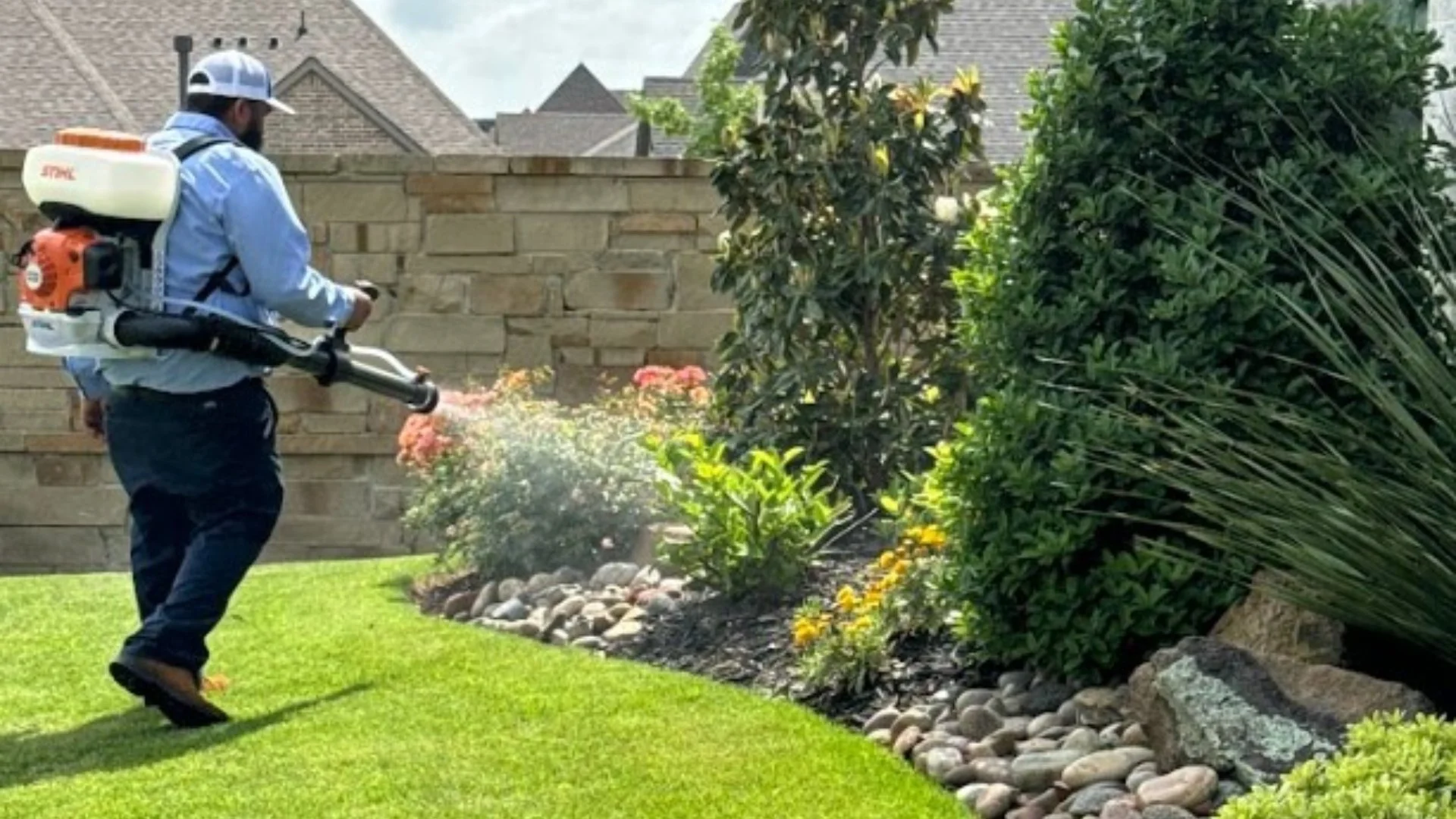
Texas grass types are the lawn grasses that can handle your part of Texas, not just in theory, but in the actual heat, soil, shade, and wear your yard deals with every week. That matters because a lawn that looks great in one neighborhood can struggle badly just a few miles away, especially around Waco, Dallas-Fort Worth, and Cedar Creek.
What makes texas grass types different
Texas makes lawn decisions harder than a lot of places. Your yard might get blazing afternoon sun, clay-heavy soil, long dry stretches, sudden downpours, and foot traffic from kids, pets, or customers, sometimes all in the same month.
That is what people mean by Texas grass types: grasses that can stand up to Texas conditions without turning lawn care into a full-time rescue project. The best choice usually comes down to a few plain things, how much sun your yard gets, how much water you can give it, how much traffic it takes, and how much upkeep you actually want.
A front lawn in a shaded Cedar Creek lot is playing a different game than a wide-open commercial property in Waco. Same state, different demands.
Warm-season vs. cool-season grass in texas
The big split is simple. Warm-season grasses grow strongest when temperatures climb, which makes them the main answer for most Texas lawns. Cool-season grasses prefer milder weather and usually struggle once summer settles in for real.
If you picture grass like a wardrobe, warm-season turf is built for August. Cool-season turf is built for March.
Why warm-season grass usually wins here
Warm-season grasses dominate because Texas summers are long, hot, and often dry. Bermuda, St. Augustine, Zoysia, and Buffalo all wake up when the weather gets serious. That means stronger growth in late spring and summer, better heat tolerance, and less stress when rain gets spotty.
You also get better odds of survival during drought and heavy sun exposure. Not perfect survival, of course. Any lawn can suffer if watering is off or pests move in. But warm-season grass starts with the right tool for the job, and that alone solves a lot.
When cool-season grass still shows up
Cool-season grasses still come up, especially in North Texas conversations. Tall Fescue, Texas Bluegrass, and Perennial Ryegrass each have a place, but usually a limited one.
Sometimes the goal is greener winter color. Sometimes it is a very specific microclimate with more shade or milder conditions. Sometimes it is overseeding, which just means spreading temporary seed over an existing lawn for seasonal color. The catch is that cool-season options usually need more water, more attention, and more luck once Texas heat really hits.
The main texas grass types You’ll see most often
Most lawns in this part of Texas come back to a short list of grass types. Each has a personality. Some are durable and aggressive. Some are softer and prettier. Some save water but ask you to lower your expectations on that golf-course look.
Bermuda grass
Bermuda is one of the most common Texas grasses for a reason: it loves full sun, handles heat well, and recovers fast. If your yard gets baked for hours a day, Bermuda usually feels right at home.
It has a fine to medium texture and spreads aggressively, which helps it fill in bare spots and bounce back after traffic. That makes it a strong choice for active lawns, sports areas, and many Dallas-Fort Worth properties where the front yard is in direct sun by late July.
The catch is shade. Bermuda does not tolerate much of it, and it can thin out fast under trees or along the side of a house that stays dim. It also spreads into beds and edges if you let it, so it is not a grass for someone who hates trimming and control work.
St. augustine grass
St. Augustine is the grass a lot of people picture when they want a thick, lush lawn. It has broader blades, a softer look, and better shade tolerance than Bermuda, which makes it popular in neighborhoods with established trees.
If your yard gets partial sun instead of all-day exposure, St. Augustine often makes more sense. It can create a full, comfortable lawn where Bermuda would struggle.
But there is a real catch here too. St. Augustine can be vulnerable to disease and chinch bugs, which are tiny insects that suck moisture from the grass and leave ugly brown patches behind. In Texas, that problem is common enough to take seriously. It also does not love extreme traffic, especially if the lawn is already stressed.
Zoysia grass
Zoysia sits in the middle of the lawn world in a good way. It usually looks neat, dense, and attractive, and it handles shade better than Bermuda while still offering decent traffic tolerance.
That balance makes it appealing if you want a polished lawn without going all in on one extreme. Some Zoysia varieties feel almost like the compromise grass for Texas, sun-tolerant enough, shade-tolerant enough, and nice to look at.
The tradeoff is speed. Zoysia grows and recovers more slowly than Bermuda. If your lawn takes a beating from dogs, backyard games, or constant use, slow recovery matters. Damage does not disappear overnight.
Buffalo grass
Buffalo grass is often the answer when lower water use and lower maintenance matter most. It is a native-leaning option that fits sunny lawns and a more natural look.
If you do not want to pour a lot of irrigation, fertilizer, and mowing into your yard, Buffalo can be appealing. It handles heat and drought better than many grasses once established.
The catch is appearance and durability. Buffalo usually does not give the same dense, manicured look as higher-input turf, and it is not the best fit for heavy traffic. If your goal is a sharp, high-use lawn, it can feel a little too relaxed.
Tall fescue
Tall Fescue is the cool-season grass that keeps showing up in Texas lawn discussions, especially in North Texas. It stays greener in cooler weather and can work in certain shaded or milder spots.
But summer is the hard part. Tall Fescue often needs more irrigation and more close attention to make it through Texas heat. In many yards, that extra effort is the whole story. It can work, but it usually is not the easiest or most forgiving choice for a permanent year-round Texas lawn.
Other grass types you may hear about
A few other names come up often enough that they are worth knowing, even if they are not the main lawn answer for most properties.
Texas bluegrass
Texas Bluegrass is usually discussed as a hybrid-style option bred to handle more heat than standard bluegrass. That can sound promising, and in the right North Texas setting it can be.
Still, it is less common than Bermuda, St. Augustine, or Zoysia because warm-season grasses are simply better matched to most Texas lawns. Think of Texas Bluegrass as a specialty option, not the default.
Perennial ryegrass
Perennial Ryegrass is most often used for winter overseeding, not as a permanent Texas lawn. If a warm-season yard goes dormant and turns tan in cooler months, Ryegrass can be seeded over it for temporary green color.
That can look great for a season. But it is a seasonal layer, not a year-round solution for Texas heat.
How to choose the best grass for your yard
Choosing grass based on a photo is a mistake. Choosing based on your actual yard works much better.
Start with sun and shade
This is the first thing to get right. A full-sun yard points strongly toward Bermuda or Buffalo. A yard with more shade usually leans toward St. Augustine or certain Zoysia varieties.
Walk your lawn in the morning and again in midafternoon. The trick is to notice where sunlight really lands, not where you assume it lands.
Think about foot traffic
Traffic tolerance matters more than most people think because weak turf gets thin fast. If your yard sees kids running, dogs circling the same path, backyard parties, or frequent commercial use, that pressure adds up.
Bermuda is usually the strongest performer here because it recovers quickly. Zoysia can also work, but slower regrowth changes the equation if damage is constant.
Factor in water use and drought
Some grasses forgive dry spells better than others. Buffalo and Bermuda are usually better choices if water use is a major concern. St. Augustine and Tall Fescue often need more support to stay looking full and healthy.
This is where honesty helps. If regular irrigation is not realistic, pick a grass that can live with that.
Be honest about maintenance
Every lawn asks for something. The question is how much.
Bermuda often needs regular mowing because it grows fast. St. Augustine may need close monitoring for pests and disease. Zoysia can look great, but repairs take patience. Buffalo can reduce inputs, but the look is less formal. If you do not want to spend weekends fixing bare spots and chasing problems, choose for your habits, not your ideal self.
Best grass types for waco, dallas-fort worth, and cedar creek
These areas share Texas heat, but that does not make them identical. Soil, tree cover, lot size, and lawn expectations still shift the answer.
Dallas-fort worth
Dallas-Fort Worth lawns often lean hard toward Bermuda, especially in sunny subdivisions and open front yards. It handles the heat, takes traffic, and recovers fast. That is a strong combo in a market where curb appeal matters and sun exposure is often intense.
In neighborhoods with more mature trees, St. Augustine and Zoysia come up more often because shade changes everything. If parts of your lawn are sunny and other parts stay filtered or dim, the decision gets more nuanced fast.
Waco
Waco lawns often do best with durable warm-season grass that can take heat and direct sun without constant fuss. Bermuda is a common fit for both homes and commercial properties because it is tough and recovers well.
If your property has more shade or a softer look matters more than maximum toughness, St. Augustine or Zoysia may fit better. But the basic Waco pattern is pretty clear: warm-season performance matters.
Cedar creek
Cedar Creek can bring a different mix of larger lots, tree cover, and more varied maintenance goals. If your place has open sunny sections, Bermuda or Buffalo may work well. If the yard sits under more shade, St. Augustine or some Zoysia varieties usually make more sense.
This is also where lower-maintenance goals often shape the decision. If you want your lawn to look good without becoming a constant project, matching grass to shade and water habits matters more than chasing the prettiest option on paper.
Common problems people run into with texas grass
A lot of lawn frustration starts with the idea that brown or thinning grass always means the wrong grass type. Sometimes it does. Often, it does not.
“My grass keeps dying” Doesn’t always mean the grass type is wrong
Warm-season grasses naturally go dormant in cooler weather, which means turning brown does not always mean dead. Drought stress can also make a lawn look rough fast, especially if watering is uneven.
Other times the issue is compaction, poor drainage, grubs feeding below the surface, or simple mowing mistakes. Cutting too low can stress the lawn badly. So can watering too little, too often, or all at the wrong times.
Pests, disease, and bare patches
Texas lawns deal with chinch bugs, grubs, fungal issues, and wear spots all the time. St. Augustine is especially known for chinch bug trouble. Bare patches can also come from repeated traffic, pet damage, or compacted soil that roots cannot push through.
The right grass does not make you immune to problems, but it does make lawn care easier. A grass that fits your conditions usually resists stress better, fills in more reliably, and gives pests fewer openings.
Quick answers about texas grass types
What is the best grass for full sun in texas?
Bermuda is usually the top choice for full sun in Texas. If lower water use matters more than a manicured look, Buffalo can also work. Zoysia can fit too, especially if you want a nicer appearance and can accept slower recovery.
What grass grows best in shade in texas?
St. Augustine is the most common answer for shade in Texas lawns. Some Zoysia varieties also handle partial shade well and can be a good middle-ground option.
What is the lowest-maintenance grass for texas?
Buffalo usually comes up first for lower-maintenance Texas lawns because it needs less water and fewer inputs once established. The tradeoff is a less dense, less formal look and lower traffic tolerance.
What grass is best for high-traffic lawns?
Bermuda is the best bet for high-traffic lawns in Texas because it recovers quickly and handles wear well. Zoysia can work too, but slower regrowth makes it less forgiving in hard-used yards.
A simple way to pick the right grass
A simple rule works surprisingly well: match your grass to your sun first, then your traffic, then your water habits, then your patience for maintenance. Get that order right, and the decision usually gets much easier.
Try one practical thing before choosing anything. Walk your yard once in the morning and once later in the day, and notice where the sun actually hits and where it does not. That one small step can save you from picking a grass that was never going to be happy there in the first place.
Disclaimer: This article is for general informational purposes only. It is not professional advice, a quote, or a service agreement. Conditions at your home or property may differ; contact a qualified professional for an on-site evaluation before making repair, safety, or spending decisions.