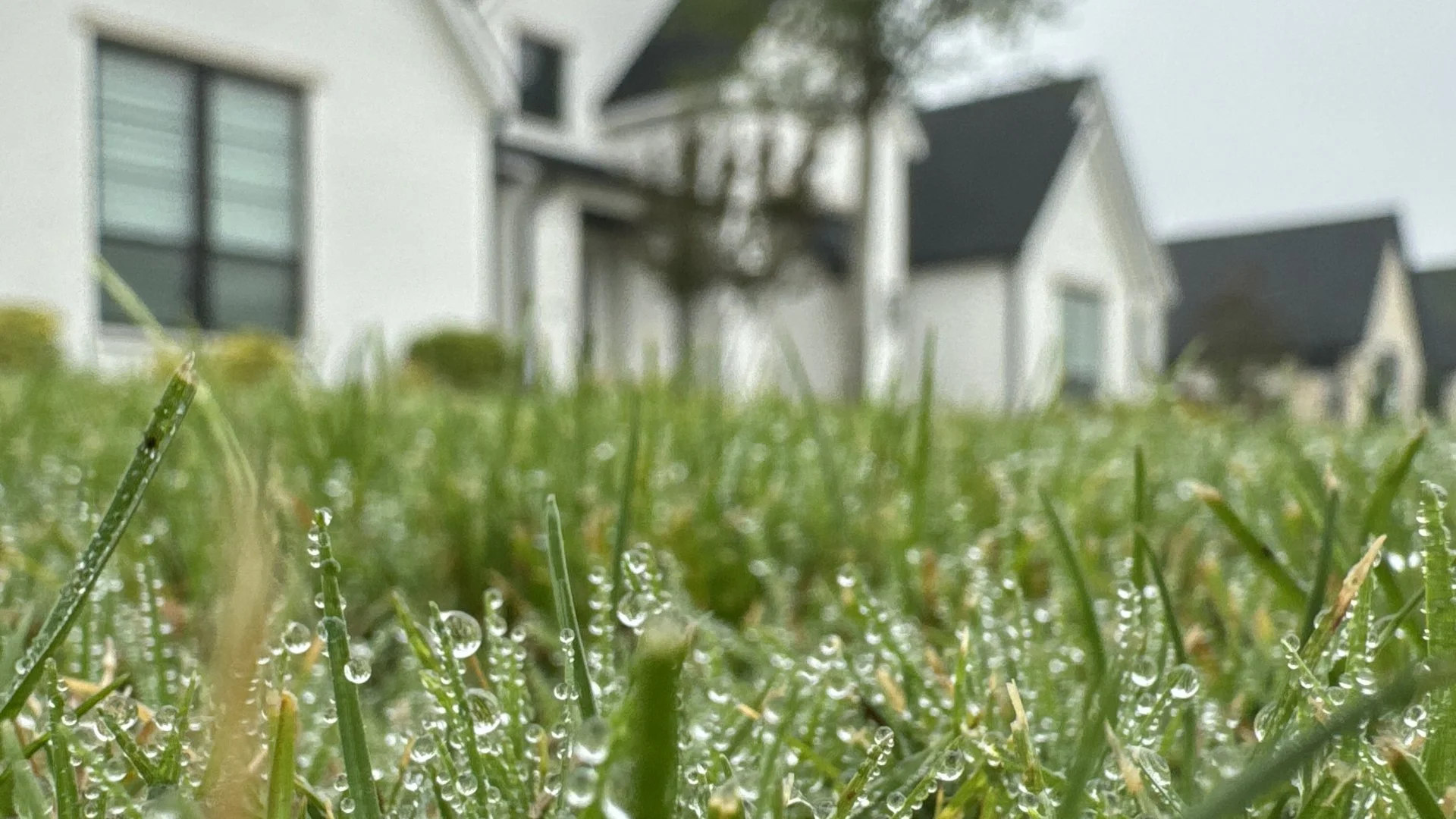
Walk across a lawn in Dallas or Fort Worth and it can feel bouncy, almost like walking on a thin carpet. Water might sit on top after a rain instead of sinking in. That spongy layer between the green grass and the soil is called thatch. In North Texas, where we grow Bermuda and Saint Augustine grass, thatch builds up more than many homeowners expect. The good news: a little thatch is normal and even helpful. Too much causes real problems. This guide explains what thatch is, when it becomes an issue, and when to take action so your yard stays healthy.
What Is Thatch?
Thatch is a layer of dead and living stems, roots, and runners that sits between the green blades of grass and the soil. It is not the same as grass clippings left on the lawn after mowing. Clippings break down quickly and can actually feed the soil. Thatch is the tougher material that builds up over time when grass grows faster than it breaks down.
In neighborhoods from Cedar Creek to Waco, our clay soil and hot summers create conditions where grass grows fast. If the soil is compacted or the lawn is fed and watered in a way that pushes top growth without strong root activity, thatch can build up. A thin layer, about half an inch or less, can help keep the soil cooler and hold a bit of moisture. Once thatch gets thicker than about three quarters of an inch, it starts to cause trouble.
When Thatch Becomes a Problem
Too much thatch blocks water, air, and nutrients from reaching the roots. You might notice:
- Water running off or puddling instead of soaking into the ground
- Lawn feeling soft or spongy when you walk on it
- Grass that stresses quickly in heat or drought
- Pests and disease that like damp, matted conditions
If you see these signs in your yard, it is worth checking how thick the thatch layer is. You can do a simple check by cutting a small wedge out of the lawn with a sharp shovel or knife and looking at the cross section. The thatch will look like a tan or brown layer between the green grass and the darker soil.
Why North Texas Lawns Build Thatch
Lawns in Plano, Arlington, and across the Metroplex often get a lot of fertilizer and water during the growing season. That encourages fast growth. At the same time, our clay soil can be compacted, which slows the natural breakdown of old roots and stems. Heavy use of pesticides can also reduce the tiny organisms in the soil that help break down thatch. The result is a buildup that needs to be managed with professional lawn care practices like core aeration and, when needed, dethatching.
When to Dethatch
Dethatching means physically removing or breaking up the thatch layer so air, water, and nutrients can reach the soil again. Not every lawn needs it every year. Whether you need it depends on how thick the thatch is and what type of grass you have.
- Bermuda grass: The best time to dethatch is late spring into early summer, when the grass is growing strongly. In the DFW area, that is usually from late April through June.
- Saint Augustine grass: This grass is more sensitive. Dethatching is best done in late spring when the lawn is actively growing and can recover quickly.
Do not dethatch when the grass is dormant or stressed. In North Texas, avoid dethatching in the peak of summer heat or in winter. Doing it at the wrong time can set the lawn back instead of helping it.
Options for Dealing with Thatch
For moderate thatch, core aeration is often the first step. It pulls small plugs of soil out of the lawn, which opens up the ground, improves movement of water and air, and encourages the natural breakdown of thatch. Many homeowners in Dallas and Fort Worth schedule aeration in spring or early fall as part of a lawn care program.
When thatch is thick, a professional may use a dethatching machine (sometimes called a verticutter or power rake) to slice through the layer and pull it up. After dethatching, the lawn needs time to recover. Water and a balanced feeding plan help the grass fill back in. If you are not sure whether you need aeration only or full dethatching, a local pro can assess your lawn and recommend the right approach.
How to Reduce Thatch Build Up Over Time
You can slow future thatch buildup with a few simple habits:
- Mow regularly at the right height for your grass type so you are not removing too much at once.
- Keep the soil in good shape with periodic core aeration so roots and breakdown activity stay healthy.
- Avoid overfeeding and overwatering; both push top growth and can increase thatch.
- Use a mix of practices that support soil health, including proper fertilization timing for Texas lawns.
If your lawn in North Texas feels spongy, drains poorly, or just is not performing the way you want, thatch could be part of the picture. Getting a clear answer on how thick your thatch is and whether you need aeration or dethatching can save you time and get your yard back on track. Contact SureGuard Lawn & Pest to schedule a lawn evaluation and get a plan that fits your property and your goals.