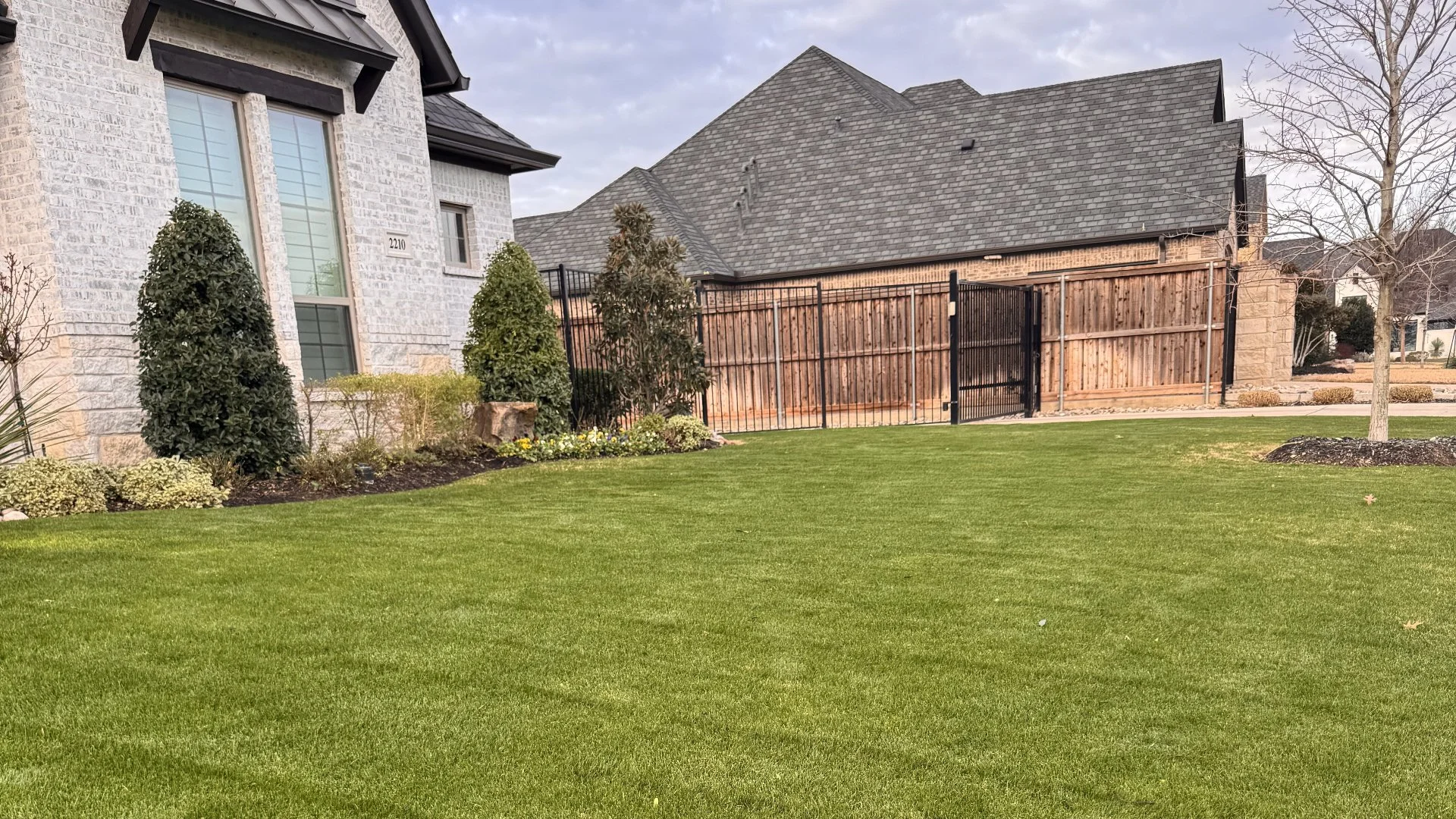
March in North Texas is when the lawn really wakes up. Temperatures rise, days get longer, and Bermuda and Saint Augustine start growing again. What you do now affects how your yard looks and holds up through summer. Skip a step and you might spend the rest of the season catching up. This checklist walks you through the main tasks so you can stay on track in Plano, Arlington, Dallas, Fort Worth, and the rest of the Dallas Fort Worth area.
Get Pre-Emergent Weed Control Down in Time
Weeds that sprout in spring get their start from seeds that have been sitting in the soil. Pre emergent products put a barrier in the top layer of soil so those seeds cannot push through when they try to grow. The catch: the barrier has to be in place before the seeds start to germinate. In Dallas and Fort Worth, that window is often in late February through early March, before soil temperatures stay warm enough for crabgrass and other summer annuals to pop.
If you have not applied pre emergent yet and it is still early March, do it soon. Once weeds are visible, you are into post emergent control, which is more work and often less effective for the whole season. Many homeowners use a lawn care program that includes pre emergent so the timing is handled for them.
Fertilize When the Grass Is Ready to Grow
March is a good time for the first feeding of the year in North Texas. The grass is coming out of dormancy and can use the nutrients to green up and build roots. Do not feed too early when the grass is still mostly dormant; the product may feed weeds instead. And do not overdo it. One balanced application in March, followed by a schedule that matches your grass type and soil, is the idea. If you are not sure what product or rate to use, a local lawn care service can tailor a plan. For more on timing through the year, see our guide on fertilization schedules for Texas lawns.
Mowing: Set the Height and Stay Consistent
Start mowing as soon as the grass is growing enough to need it. Set your mower at the right height for your grass. For Bermuda, that is often around 1 to 2 inches; for Saint Augustine, 2 to 3 inches. Mow often enough that you are only removing about one third of the blade height each time. Letting the grass get too tall and then cutting it short stresses the lawn and can make it more prone to weeds and pests. Keep the blade sharp so you are cutting, not tearing.
Consider Core Aeration
North Texas soil is mostly clay and compacts easily. Compacted soil blocks air, water, and nutrients from the roots. Core aeration pulls small plugs of soil out of the lawn, which opens the ground and helps the grass build a stronger root system. Spring is a solid time for aeration in our area, especially for Bermuda. If your lawn gets a lot of foot traffic or has never been aerated, March or early April is a good window. After aeration, water and fertilizer are used more effectively. More details are in our post on helping your lawn survive summer by aerating in spring.
Check for and Treat Pests Early
March is when many pests become active. Fire ant mounds show up in open areas. Grubs and other insects that feed on roots may be moving in the soil. Treating early reduces the chance of big problems later. A pest control program that includes the yard can target fire ants, grubs, and other lawn pests before they multiply. If you have had issues in past years, getting on a schedule now pays off.
Inspect Irrigation and Watering Habits
Before you rely on the sprinklers for the season, check that every head is working and aimed at the lawn, not the sidewalk or street. Fix leaks and broken heads. Then plan to water deeply and less often rather than a little every day. In March, the lawn usually does not need as much water as it will in summer, but having the system ready and your routine in place keeps the lawn from stress when the heat arrives. For specifics on amount and timing, see our guide on how much and when to water your lawn in Dallas and Fort Worth.
March Lawn Checklist at a Glance
- Pre emergent: Apply before weed seeds germinate (late February to early March in DFW).
- Fertilizer: First feeding of the year when the grass is actively growing.
- Mowing: Start when growth warrants it; set correct height and mow regularly.
- Core aeration: Schedule if the soil is compacted or the lawn has never been aerated.
- Pest control: Address fire ants, grubs, and other lawn pests early in the season.
- Irrigation: Check and repair sprinklers; plan for deep, less frequent watering.
Staying on top of these tasks in March sets your lawn up for a strong season. If you would rather have a pro handle timing and applications, contact SureGuard Lawn & Pest. We serve Dallas, Fort Worth, Waco, Cedar Creek, and surrounding communities with lawn care, pest control, and tree and shrub care. We can build a plan that fits your yard and your schedule so you get a great lawn without the guesswork.