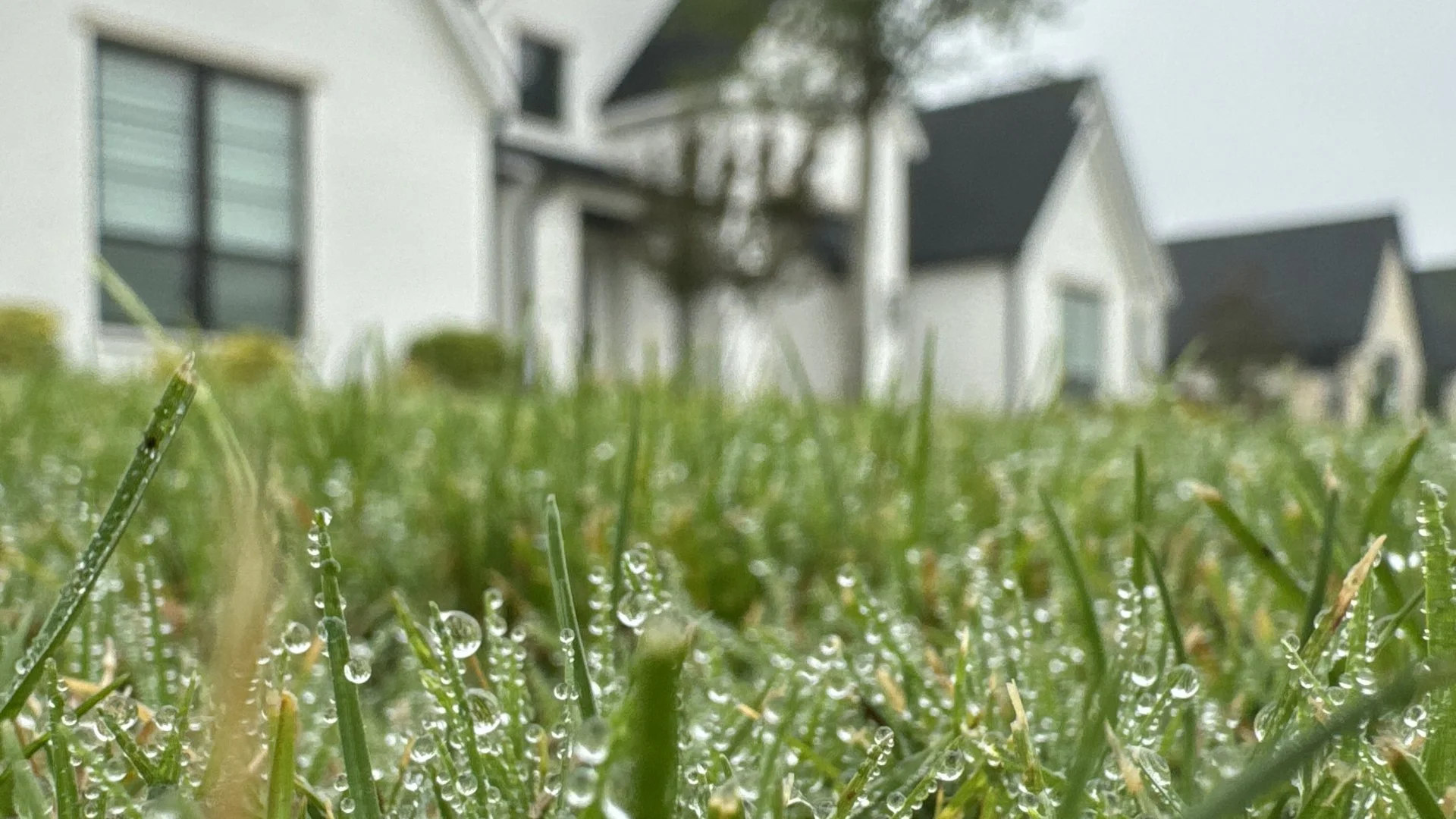
You run the sprinklers, the calendar says spring, and most of your yard in Frisco or Allen looks brighter week by week. Then there are those stubborn patches that stay tan, gray, or thin while everything around them wakes up. Before you turn up the water and raise your bill, it helps to know whether you are fighting dry soil or a lawn problem that water alone will not fix.
Start With the Simple Test Everyone Can Do
Grab a screwdriver or a soil probe and push it into a healthy area and then into a problem spot. If the trouble zone is rock hard a few inches down, you may be looking at compaction or uneven coverage from the irrigation system. If the soil feels damp similar to the healthy grass but the blades still look sick, you may be dealing with a lawn disease or heavy wear that needs a different plan.
Compare the pattern on the ground to the pattern on your sprinkler map. Dry spots often line up with heads that are blocked, tilted toward the sidewalk, or watering the street. Disease patches are more likely to be circles or irregular blobs that do not match a single sprinkler head. Our guide on how much and when to water your lawn in Dallas and Fort Worth can help you rule out the obvious before you chase the wrong fix.
What Spring Humidity Does to North Texas Grass
Cool nights, warm days, and morning dew are normal for Plano, McKinney, and Garland in March and April. Grass blades stay wet longer at sunrise. Foot traffic and mowing can spread trouble from one area to another if the lawn is stressed. Saint Augustine and Bermuda both grow fast in spring, but they also show damage quickly when something is off in the soil or the leaf surface.
Clay soil, which is common from Fort Worth through eastern Dallas suburbs, holds water tightly once it is wet, yet it can also shed water if the surface is baked or packed. That odd mix means two lawns on the same street can look different even when both owners run the same minutes on the clock. A low corner near a downspout may stay soggy while a higher strip along the driveway browns out. Matching your care to your own lot matters more than copying the schedule from a neighborhood group online.
Signs that point away from simple drought
- Edges that look dark or smeared: A water stressed lawn usually turns evenly straw colored. Some patchy problems show a sharper edge between sick grass and healthy grass.
- Same spot, several years in a row: If the same corner always fails in spring, you may have compacted soil, buried debris, or a disease that returns when the weather matches its comfort zone.
- Grass pulls up too easily: When roots are weak from pest damage or rot, tufts may lift like a loose carpet. That is different from a lawn that is simply dormant from cold nights.
If you are working through seasonal tasks, our March checklist for a strong lawn in North Texas lines up feeding, weed prevention, and pest timing so you are not accidentally stressing the turf while you try to help it.
Cultural Fixes That Help Either Way
Whether the issue is dry ground or something more, a few habits help most lawns in the Dallas Fort Worth metro area. Mow with a sharp blade and avoid cutting more than one third of the leaf height at once. Water deeply and less often so roots reach down instead of hugging the surface. If water always runs off toward the curb, the ground may need mechanical help such as aeration so moisture can sink in. Our article on aerating in spring to help your lawn survive summer explains why that matters before June arrives.
Bagging clippings is not always required, but if you know a neighbor had widespread problems last season and your mower throws clippings across property lines, a few weeks of careful cleanup can reduce spread of whatever stressed their yard. Keep pets and kids off areas that are being treated until the product label re-entry interval has passed.
Fertilizer is not a magic eraser for spots. When grass is already struggling, heavy nitrogen can push weak growth that looks green for a short time and then collapses when the first hot week hits. If your soil test or your lawn history says you are low on potassium or other minerals, a balanced plan beats chasing the brightest bag on the shelf. Many homeowners in Richardson and Mesquite do well with lighter spring feeding and a stronger focus on even water and healthy roots first.
Shade matters too. As trees leaf out in April, areas that looked fine in February can thin out because grass is not getting enough light. Thin grass in shade is not always disease. Sometimes the fix is a taller mowing height, a more shade tolerant grass plan for the long term, or trimming lower branches so morning sun can reach the ground. If you are unsure, compare how the patch moves with the sun across the yard over a few days.
When It Is Time for a Professional Lawn Plan
Do it yourself tests are useful, yet they have limits. A trained eye can tell whether you need nutrition adjustments, a disease control visit, soil work, or a mix of all three. If patches double in size within a week or two, or if several lawns on the block show the same pattern after heavy rain, waiting until summer often means a larger dead area and a bigger repair bill.
We also see trouble where pets use the same corner every day, where a trampoline sat all winter, or where a truck parked on the grass during a remodel. Those spots can look like disease from the street yet respond to simple changes in traffic and a little time. Honest conversation about how you use the yard helps any professional set realistic expectations for recovery.
If you treated on your own and the problem returned after the next rain, the product choice, timing, or rate may not have matched the grass type or the active problem. Reusing partial bags from last year can mean weak results if moisture or temperature was different. Rather than stacking more chemicals on your own, a structured plan from someone who works in North Texas every week can save money and stress.
SureGuard Lawn & Pest serves Dallas, Fort Worth, Waco, Cedar Creek, Mabank, and communities around the metroplex with programs built for local weather and local grass types. You can read more about our approach on our lawn care service page and our focused lawn disease control options. If you want a clear answer before you spend money on the wrong bag from the store, contact us and we will walk your lawn with you.
Spring Lawn Checklist for Mystery Brown Areas
- Check soil moisture in both healthy and thin spots before you change the clock on the controller.
- Walk the sprinkler zones and look for tilted heads, low pressure, and spray blocked by new shrubs.
- Note the shape of the damage and take a few dated photos so you can see if it spreads.
- Hold off on aggressive feeding until you know whether the grass needs food, water, or treatment for a leaf or root issue.
- Plan aeration or soil work if water will not enter the ground and you see runoff within minutes.
- Call a pro if patches grow fast, repeat each spring, or cover more than a few square yards.
Spring is the easiest season to correct small problems before the North Texas summer adds heat stress on top of whatever started in March or April. Use the checks above, lean on trusted local guides on this blog, and reach out when you want a second opinion from people who treat lawns here every day.