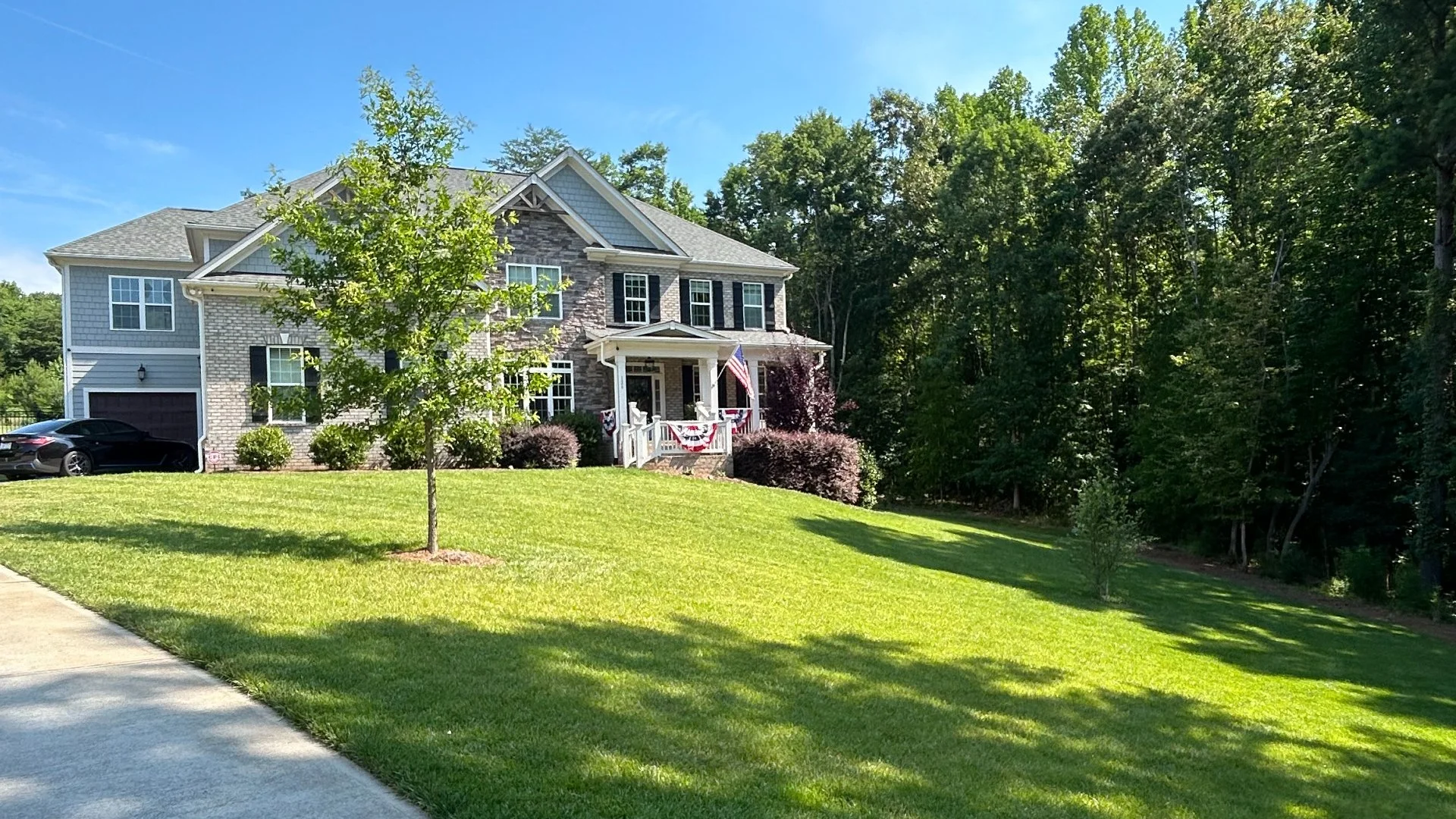
Late spring around Dallas Fort Worth, Waco, Cedar Creek, and Mabank often stacks the same four stresses at once: turf that looks tired in stripes, bugs that stage near doors and fence lines, water that either runs off or sits too long on clay, and entry shrubs that grew faster than airflow along the porch. Most homeowners do not lack effort. They lack order. Peak heat will arrive whether your controller, mower, and perimeter habits are aligned. This quiz gives you a reading order based on what bothers you most when you step outside today, not what a neighbor three cities away is fighting on social media.
Answers point toward SureGuard programs we already publish for North Texas: lawn care, pest control, honest irrigation culture, and tree and shrub care. Results are a starting map for research and conversation, not a remote diagnosis. If every answer feels true, run the quiz twice with different main worries or skip straight to contact for one coordinated walkthrough.
Why summer priority matters on clay lots
North Texas clay forgives slow corrections on water yet punishes repeated floods and dry corners on the same address. Warm season grass can look green while roots thin from grubs or chinch pressure below the canopy. Perimeter pests stage beside grill pads and tall fence lines before guests notice the open lawn. Entry shrubs hold dew against brick while Bermuda in full sun looks thirsty an hour later. None of those stories require four separate emergency calls if you sequence work honestly before thermometers stall in the nineties for weeks.
Read how much and when to water your lawn in Dallas and Fort Worth when dry stripes sit beside soggy downspouts. Read warm season lawn insect signals when turf pulls loose or chewed blades cluster along pavement. Read chigger season tall grass and fence lines when bites follow border work more often than open lawn chores. Those articles deepen the same four buckets this quiz sorts into lawn, pest, water, and trees.
How the four questions work
Question one captures the top stress as temperatures climb. Question two asks where you notice it first on the lot. Question three captures how long the pattern has persisted. Question four asks what you want handled before peak heat locks fewer options. Together they suggest whether to open with lawn programs, exterior pest routes, water and drainage habits, or woody plant care. Each outcome links to service pages plus blog articles that deepen the same topic without sending you off site.
Scoring is simple. Questions one, two, and four each vote for lawn, pest, water, or trees. The category with the strongest match becomes your suggested starting point. Question three adds a timing note only: whether the pattern is new this season, recurring from last year, or unfamiliar because you are new to the home. That note changes how aggressively to ask for a program versus a single visit, not which service category fits the symptoms you see.
What each outcome path covers
A lawn led result points toward feeding, weed timing, aeration thinking, and insect scouting through grub control and lawn insect control when probes or chewed blades demand it. A pest led result emphasizes perimeter routes, fire ant edges, mosquitoes at saucers, chiggers on tall borders, and ticks where pets brush unmowed corners. A water led result emphasizes skips after rain, head checks, low bowls, and pairing irrigation culture with core aeration when compaction blocks absorption. A trees led result emphasizes entry airflow, mulch depth, and canopy health through structured shrub programs before you restart turf projects twice in one season.
Keep expectations practical: matching symptoms to a service category is different from deciding product rates, which only makes sense on your soil after a visit. For wider seasonal context, pair your result with early summer exterior walkthrough guide so one lap across the lot aligns with whichever quiz outcome you receive. Review guest week perimeter prep checklist when porch traffic and perimeter pests share the same calendar even if your quiz result points elsewhere first.
Before you start clicking
Stand on the porch or back patio and walk mentally along the route you use most evenings. Notice whether your eyes go first to color in the open yard, spider silk near the light fixture, a sprinkler mist that never reaches the dry corner, or loropetalum that grew into the handrail. That honest first glance usually matches how question one and question two should be answered. If you maintain the lot with a partner, compare notes afterward. One person often sees perimeter pests while the other tracks turf color because you enter the property from different doors.
Quiz results work best when you answer for the whole property, not only the zone visible from the kitchen window. Corner lots in Allen and wide easements in Mansfield hide fence pressure that never shows from the front walk. Mention those edges when you follow up through contact so visits respect how the lot is actually used at dusk.
Your turn
Summer priority planner
Pick one answer in each group so we can line up a useful path.
Your suggested summer starting point
After you click the button
Read the service page slowly enough to see what visits typically include, then skim the blog link for homeowner level context. If your quiz result points to water work but chewed blades still bother you, bookmark lawn insect control for a second pass. Landscapes are layered, and SureGuard builds programs that can combine lawn, pest, and shrub visits when your lot needs more than one skill set. Use the quiz to reduce decision fatigue, not to ignore other clues that a technician might notice in person.
A quick reminder
Online quizzes cannot see buried concrete, irrigation leaks, or shade that moves when neighbors trim their trees. They also cannot replace label directions on products already applied to your grass. When an answer feels close but not exact, treat the result as a chapter title, not the whole book. Neighbors in Allen, McKinney, Arlington, and Fort Worth often share the same red clay and warm season grass, yet two lots on the same street can need different sequencing. For perimeter context, pair your result with guest week perimeter prep checklist or chigger season tall grass and fence lines when tall borders and entry pests share the same weekend.