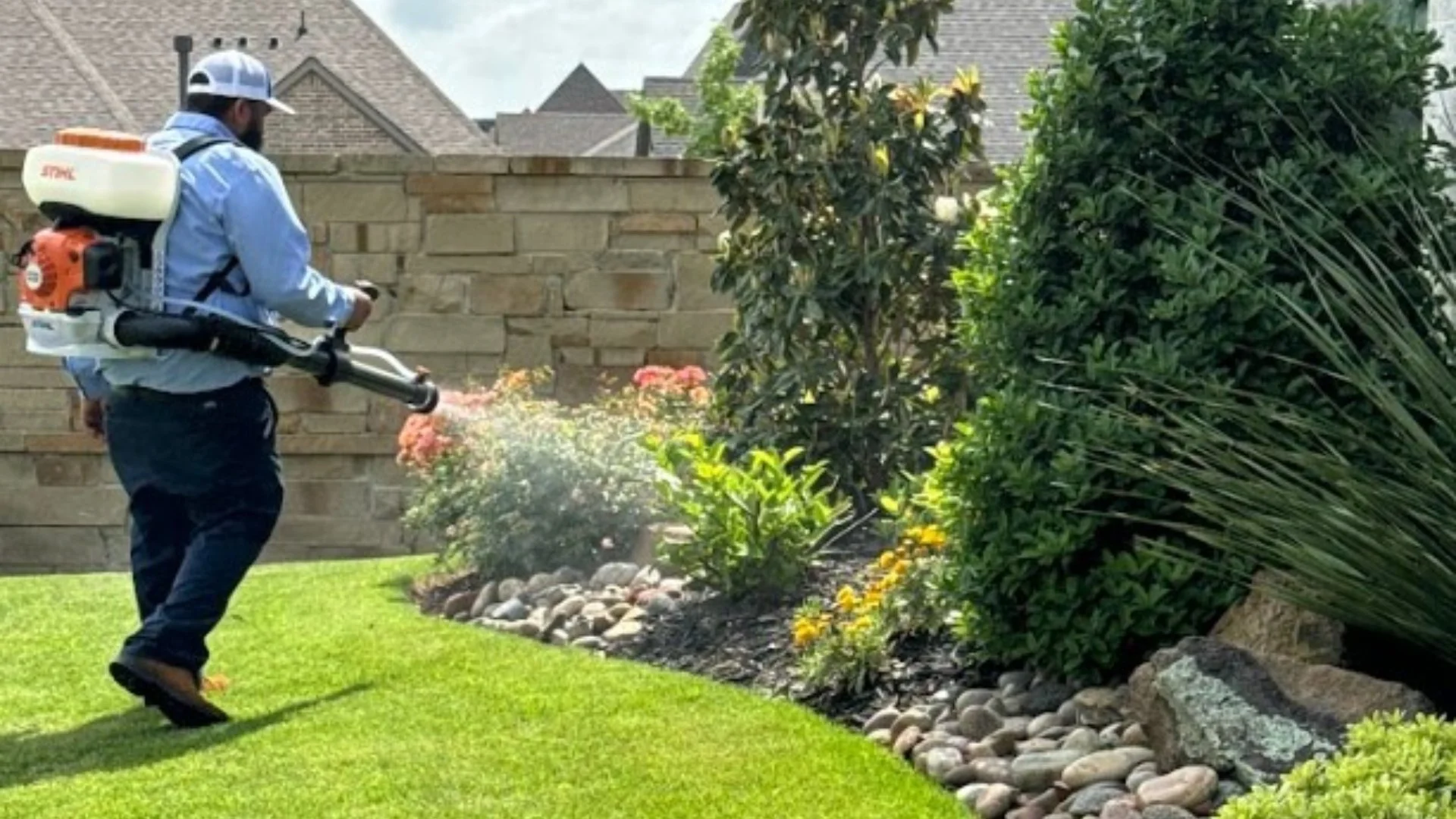
Bugs on the kitchen counter and bugs along the foundation are related, but they do not start on the same side of the wall. Perimeter pest control and indoor pest service begin with different evidence and different access. SureGuard offers both perimeter pest control and indoor pest control across Dallas Fort Worth because treating only one side often leaves the other active.
A homeowner who sprays the kitchen while leaving mulch against the slab, gaps under the door, and untrimmed shrubs against brick is fighting the wrong half of the pattern. The reverse is also true. A perimeter pass will not remove a pantry infestation that is already reproducing indoors.
What perimeter service is trying to change
Perimeter work focuses on the exterior band: foundation edges, door thresholds, weep holes, utility penetrations, and harborage in beds. The goal is to reduce the staging area where crawlers rest before they slip inside. Pulling mulch back, trimming plant contact, and sealing obvious gaps support that work. Treatments along the exterior follow the inspection, not a generic spray of the whole yard.
Evening sightings along the slab, webs under eaves, and trails at the garage door are perimeter clues. Note the time of day and the exact corner. Those details matter more than a general complaint that the yard has bugs.
What indoor service is trying to change
Indoor service starts with evidence inside rooms: kitchen sightings, bathroom drains, attic activity, baseboard trails, and stored product pests. The technician needs to know which room, which time, and whether food, moisture, or entry points dominate. Closing the pantry while ignoring a plumbing leak under the sink leaves the next generation a water source.
Photograph droppings, damage, or live insects when you can do so safely. Do not move every item before the visit if that destroys the pattern the technician needs to see.
Read both sides when activity connects
Many homes need both views. Ants that trail from a shrub, across the slab, and into the kitchen are one continuous story with two work zones. Spiders that stage under eaves and then appear in the ceiling corner are another. Ask for a plan that names exterior and interior steps instead of hoping one product covers both.
When mosquitoes or fire ants dominate the yard while indoor sightings are rare, keep those specialty services distinct. Browse mosquito control and ant control when those patterns lead. Lawn stress during heat is a separate read in our peak heat pests and lawn stress article.
Entry points and monitoring
Door sweeps, window screens, and utility penetrations decide how hard indoor work has to fight reentry. Mark daylight under doors and torn screens on your sketch. Monitoring after service tells you whether activity dropped or simply moved to the next room. Keep a short log for two weeks: room, date, and what you saw.
Commercial and residential access differ
A house and a small office park need different access plans even when the pest is the same. Alarm codes, after hours rules, shared dumpster pads, and tenant notices change how perimeter and indoor work get scheduled. Write those constraints into the request so the first visit is not spent waiting on a lock.
If multiple suites share a building, say whether activity is limited to one tenant or showing in common halls. That detail decides whether indoor service stays inside one suite or needs a wider conversation with property management.
Keep lawn products out of the pest story unless they connect
Fertilizer dates and weed control rarely explain a kitchen trail, but exterior treatments and irrigation timing can change insect pressure along the slab. Mention recent landscape work, mulch delivery, or irrigation repairs when they sit beside the foundation band you want treated.
What to send before we schedule
Send indoor photos, exterior photos of the foundation band, notes on which pests you think you are seeing, and whether kids or pets limit product choices. Mention your city so we can align with Dallas Fort Worth service areas. Then contact SureGuard at (972) 406-8600.
Perimeter and indoor services start on opposite sides of the wall. Treat them as partners when the evidence connects, and as separate scopes when it does not.