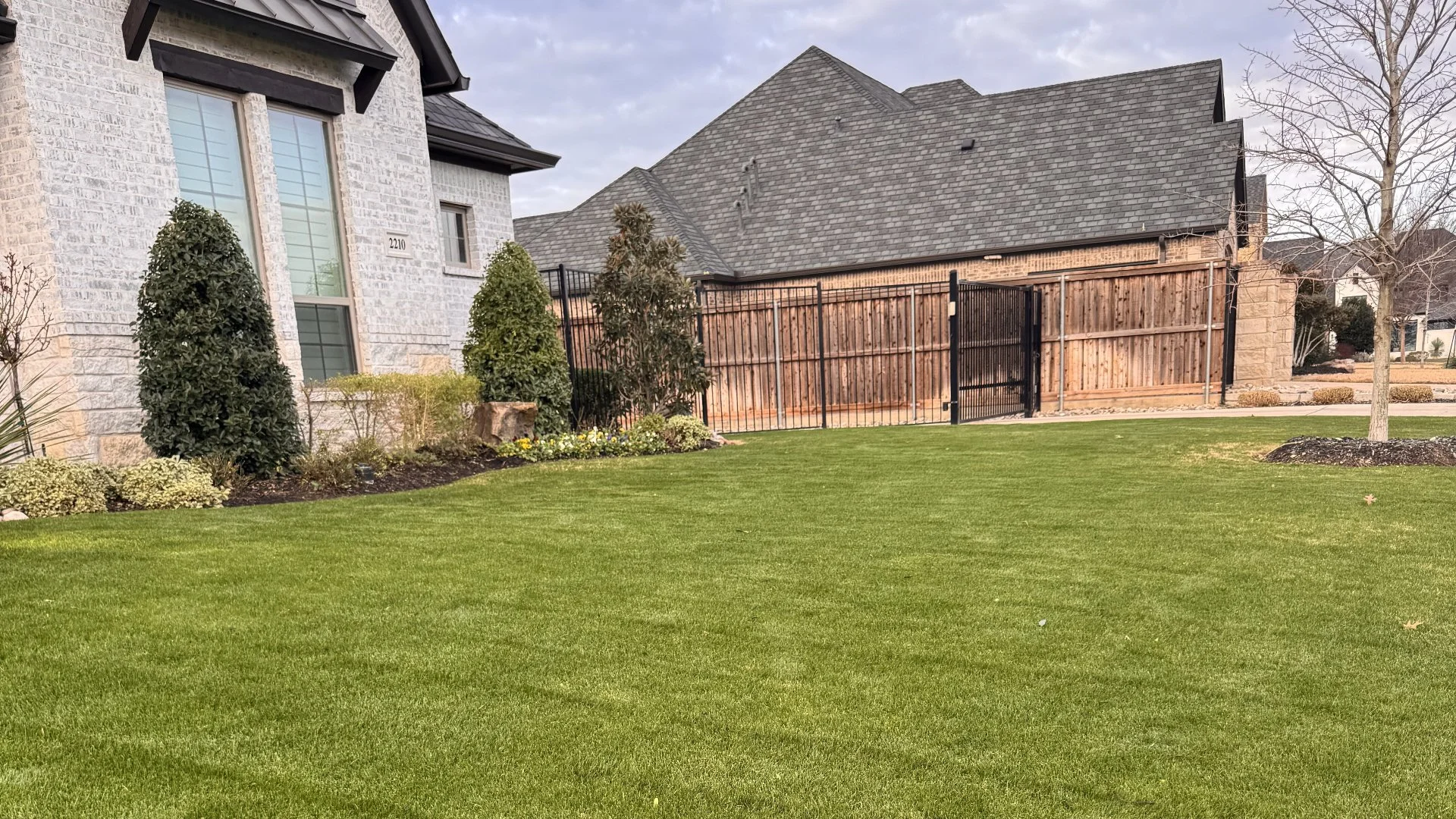
Spongy Bermuda and hard clay can both look like a lawn that needs help, but they ask for different tools. Thatch removal and core aeration solve different North Texas lawn problems. SureGuard lists core aeration inside our Dallas Fort Worth lawn care programs. Homeowners in Plano, Arlington, and nearby cities often request one service when the other is the better match.
Thatch is a layer of organic material between green blades and the soil. Compaction is soil particles packed so tightly that air and water move poorly. A spongy feel can come from thatch. Water that sheets off after a storm can come from compaction. Sort those before you schedule.
How to tell thatch from compaction
Push your fingers into the canopy. A thick, springy mat that feels like padding above the soil suggests thatch. Probe deeper with a screwdriver. If the surface feels cushioned but the soil below is still workable, thatch may be leading. If the probe stops hard and irrigation water runs to the curb, compaction deserves the first look.
Cut a small wedge in a problem area and look at the profile. A brown layer of stems and roots above the mineral soil is thatch. Dense, structureless clay with few pores is compaction. Photograph the profile so a technician sees what you saw.
What core aeration does
Core aeration pulls plugs and opens channels so water and air reach roots. It is a strong answer when clay seals after traffic, construction, or repeated shallow watering. It is not a magic fix for a lawn that is mostly dead, and it is not the same as scraping thatch off the surface. After aeration, plugs break down on the lawn. That temporary look is normal.
Ask how seeding, fertilization, and irrigation should follow the aeration window. Our wider lawn care programs can sequence those steps when the lawn still has living cover worth improving.
What thatch focused work is trying to solve
When thatch is excessive, water and fertilizer stall in the mat instead of reaching soil. Mowing habits that remove too little, or growth that outruns breakdown, build that layer. Some lawns need dethatching or power raking style work when the mat is truly thick. Others only need mowing corrections and time. Do not assume every spongy lawn needs aggressive removal.
Aggressive thatch work on a thin lawn can tear living stolons. Confirm density and grass type before anyone schedules a heavy machine pass. Bermuda and Saint Augustine behave differently under stress in North Texas heat.
Do not confuse either problem with insects or disease
Larvae, chewed roots, and fungal patterns create their own thin spots. Peel a small edge where the canopy feels weak and look for insects before you blame thatch. Match clues with lawn insect control or lawn disease control when evidence fits. Afternoon storm ribbons on clay belong in their own column, as in our note on afternoon storm water ribbons.
Traffic, irrigation, and follow up
Mark play areas, pet paths, and parking strips on a sketch. Those zones compact first. Note irrigation that short cycles every evening, which can encourage shallow roots and surface softness that feels like thatch. After either service, keep heavy traffic off soft ground until the lawn recovers enough to take feet again.
Tree and shrub roots along bed edges compete with turf for water. Keep tree and shrub care notes separate when ornamentals are the real stress source.
Season and grass type change the recommendation
Warm season Bermuda in Plano does not behave like a thin Saint Augustine lawn in heavier shade. Aggressive thatch work on a weak stand can remove living tissue you wanted to keep. Aeration timing should respect when the grass can recover, not only when the homeowner is free on a Saturday. Tell us the grass type and how much living cover remains before we recommend a machine pass.
New lawns from seed or sod need a different first year plan than a mature lawn that slowly sealed under traffic. If you are also considering overseeding, say so so the soil opening and seed contact can be planned together rather than as two disconnected weekends.
What to send SureGuard
Send a wide photo, a close photo of the turf surface, a profile photo if you cut a wedge, and notes on watering and traffic. Mention Plano, Arlington, Dallas, or your city so we match our Dallas area service map. Then contact SureGuard at (972) 406-8600.
Thatch removal and core aeration both help North Texas lawns when they match the soil story in front of you. Choose with evidence, not with the first tool that sounds familiar.