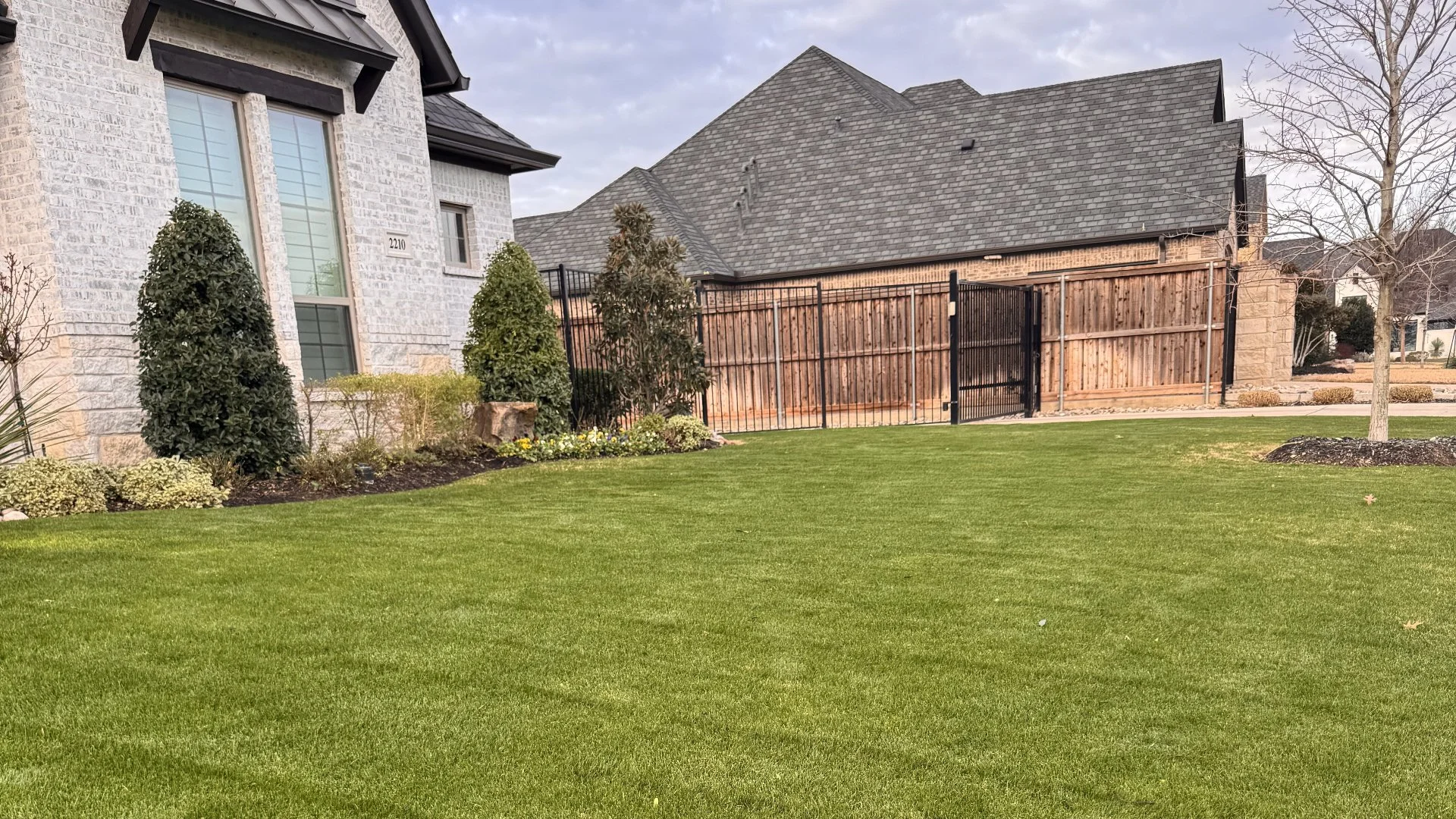
Late May around Plano, Mesquite, and Waco often feels like summer arrived while the irrigation clock still thinks it is April. Warm season turf pushes growth, nights stay soft on clay, and pest pressure shifts to soggy corners, fence lines, and patio edges where water and food meet. Late May is not the month to flood your way out of color problems. It is the month to align skips, mowing height, and exterior programs before June heat compresses every decision into one weekend.

Clay still holds rain when the controller says run

North Texas clay forgives slow corrections and punishes repeated floods. If your street saw more than an inch in twenty four hours and clouds linger, plan a skip before you open the app in a hurry. Write the skip on paper too. Busy weeks are when people forget they already paused zone four.

For seasonal context, read how much and when to water your lawn in Dallas and Fort Worth before you rebuild the entire program. Pair radar with boots: if shoes pick up mud along downspouts, soil already received more than the timer should add.


Pest pressure follows moisture at night

Overwatered turf stays soft after dusk, which favors fungus and resting sites for mosquitoes and other biting insects. If adults spike beside soggy corners, read mosquito breeding sites after April rains and review mosquito control when habitat edits are not enough.

Fire ant edges near patios still matter when irrigation keeps clay soft beside hardscape. See May Bermuda and fire ant patio edges on clay when domes and wear stripes show up in the same week.


Walking zones in the same shoes you use for guests

Feel squish along downspouts, walk north faces where dew lingers, and note water crossing pavement toward the street. Photograph one wet corner and one dry corner before you buy another bag of product. Color and moisture often disagree on clay lots.

Our article on puddles that sit for days still helps when low bowls return after storms. May early summer irrigation skip guide explains how boots should inform the clock through late May.


Mowing and canopy height through handoff weeks

Taller warm season canopies shade soil and ride heat better than a revenge cut after thin weekends. If growth jumped after warm rain, mow again sooner instead of one deep pass that exposes crowns. Read April Bermuda thatch signals when color looks uneven for reasons beyond water.

Spongy thatch may need mechanical relief before you push more water at a mat that will not drain. Spring guide to core aeration explains timing that respects clay without rushing heat season. Service detail lives on core aeration within our lawn care menu.


Weed and fungus signals after wet late May weeks

Weeds germinate fast when nights stay mild and soil stays soft. A skip week is not permission to ignore mowing. If circular patterns appear after a wet block, mention them before you increase water to fix color. Sometimes the answer is less runtime, not more.

Read brown patches that stay tan while the rest greens up when shade stress and disease disagree. Weed control belongs in the talk when broadleaf pressure follows wet stripes.


Perimeter and patio traffic in the same calendar

Holiday and weekend traffic packs soil in lanes that already held water too long. Read Memorial weekend lawn and patio traffic when wear and wetness show up together. Grill drips and pet bowls change ant pressure near patios without creating mounds overnight.

Review perimeter pest control and May guest week perimeter prep checklist when several exterior worries stack before guests arrive.


Controller habits that survive compressed late May weeks

Rain sensors and smart controllers help only when they are clean and calibrated. Blow debris off vented caps and verify the sensor actually pauses after a storm. Write zone numbers on the lid map so you are not guessing which station waters the north face.

North faces and strips under mature trees stay damp longer than open Bermuda in full sun. Splitting zones by sun and slope beats one long cycle that floods clay in shade while the driveway strip looks dry.


Ticks, tall edges, and lawn insect timing

Tall grass along property lines still behaves like summer habitat before June. Mow those borders on a steady rhythm and note where shade keeps soil damp. Pair that habit with ticks along fences and property lines when pets brush tall corners after park walks.

Coordinated lawn care and pest control visits reduce repeat walks when irrigation fixes fungus pressure and resting sites at the same time.


How SureGuard fits late May decisions

We work across Dallas Fort Worth, Waco, Cedar Creek, Mabank, and surrounding communities. Use contact with two photos, your town, and a note about which zones you skipped after rain.

Late May irrigation and pest pressure share one story on warm season lawns. Skips, honest mowing, and perimeter timing often explain what you see better than another long cycle on the timer.

Mark on the calendar when you skipped and when you resumed. That history helps technicians see patterns faster than a single photo of olive turf on a wet morning.

Saint Augustine in shade may stay dark green while Bermuda beside the walk looks gray after the same rain. Split decisions by zone instead of one global skip or one global run.

Check sprinkler heads for clogged nozzles after storms. A dry corner beside a flooded corner often traces to hardware, not only the clock.

When you resume after a skip, increase slowly. One normal cycle on dry soil beats returning to a long flood that repeats the mushy stripe you just fixed.

Guest weeks compress decisions. Build skip habits in late May so you are not guessing while chairs still sit on the same soggy stripe when June heat arrives.

Write the date beside each skip on the garage whiteboard or in your phone notes. Technicians and lawn crews can read that history faster than a single photo of olive turf taken on a humid morning after a long cycle ran by mistake.

When chinch or billbug pressure is a suspect on bermuda arcs, mention it on contact alongside irrigation notes so pest and turf visits share one calendar instead of two emergency calls the week guests arrive.