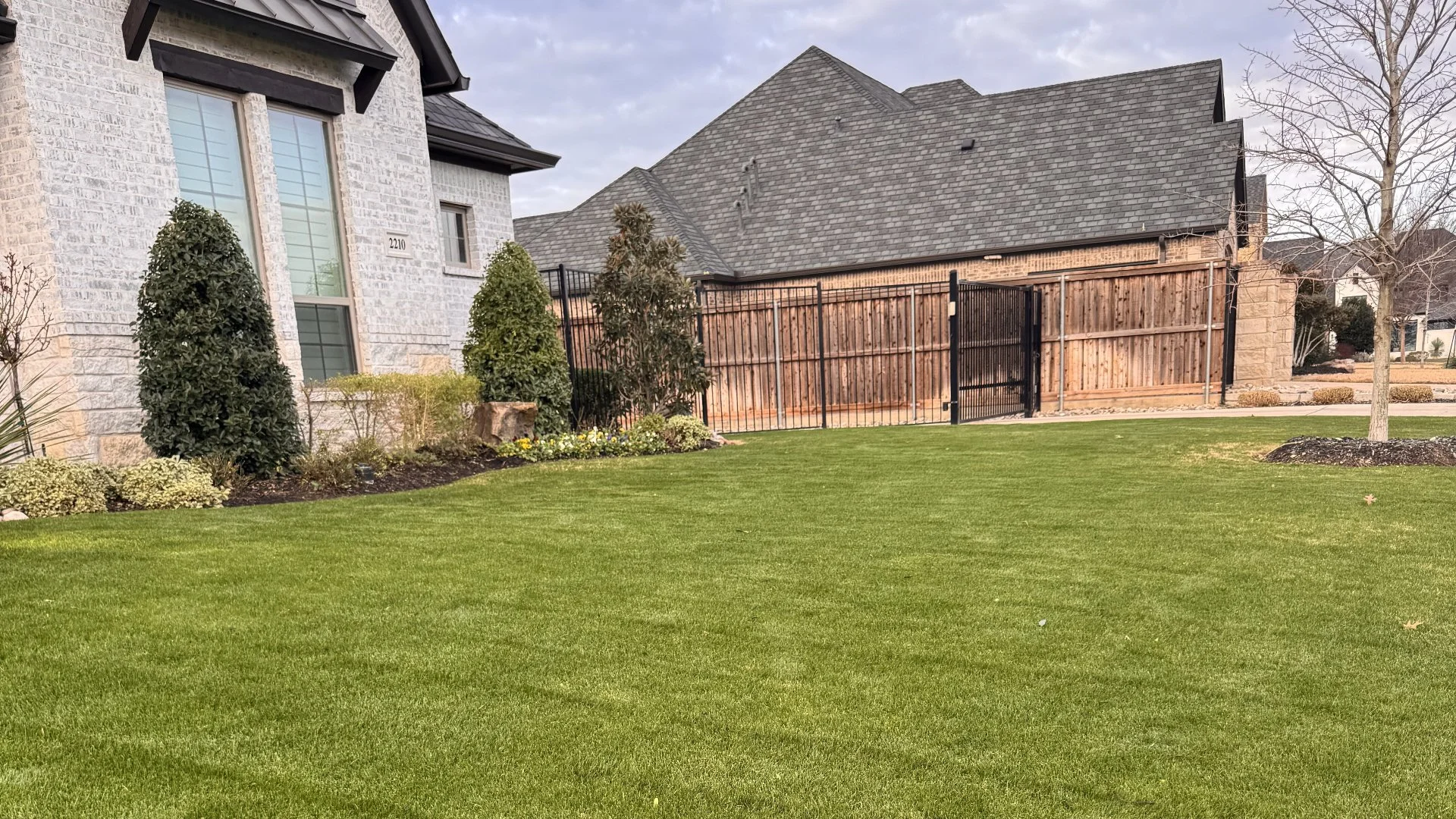
Your mower suddenly sounds different even though you changed blades last season. The turf looks dense on top yet spongy underfoot. Those are common April clues when Bermuda wakes hard across Plano, Frisco, McKinney, and south toward Waxahachie. Thatch is simply organic matter that accumulates between soil and green blades faster than soil life breaks it down. A little is normal. Too much becomes a sponge that holds moisture, blocks air, and invites fungus when nights stay mild.

Why April exaggerates the story

Bermuda grows from runners and crowns once soil stays warm. April storms add humidity while wind pulls moisture off leaf surfaces. You see fast vertical growth that hides the layer below until you push a screwdriver through the canopy and feel resistance. If you already worked through your March checklist for a strong lawn in North Texas, April is less about new products and more about honest mowing and realistic traffic patterns.


Mowing habits that keep thatch from winning

Remove only the top third of the blade on each visit. Bagging every pass is rarely required on healthy turf; returning clippings recycles nutrients when the lawn is not diseased. If clippings clump because the turf stays wet, fix irrigation overlap before you blame the mower deck. Alternate mowing direction so wheels are not wearing the same ruts along fence lines and trampoline pads.

Edges along concrete often stay taller than the middle because string trimmer work lags behind the rotary pass. Uneven height invites weeds to flower where you do not notice until seeds spread. A few extra minutes every other visit keeps transitions even.


How aeration fits without rushing the calendar

Core aeration pulls plugs to relieve compaction and open channels for water and air. It is not a magic eraser for thatch, yet it pairs well when soil feels tight under high traffic corners. Read spring guide to core aeration for North Texas lawns for timing notes that respect clay soil around Dallas Fort Worth. Heavy hand raking on wet soil often does more harm than good.


Feeding and weed work in the same month

Fertilizer should follow growth, not only a holiday weekend. Pair feeding with weed control that matches what is actually present. Our lawn fertilization page explains how programs layer visits through the season. If broadleaf weeds are the main eyesore, weed control belongs in the same conversation so you are not fighting chemistry with conflicting goals.


When to call for a walkthrough

If spongy feels deeper than a half inch when you probe, or if brown patches return in the same shade pockets every spring, ask for eyes on the ground. SureGuard serves communities across the metroplex and surrounding areas with programs built around warm season grass and local soil. Start at the lawn care overview and use contact when you want a plan written down instead of restarted each weekend.


Simple April test you can repeat

Water a small zone for a normal cycle, wait thirty minutes, then slice the turf with a hand trowel. If water sits in a thatchy mat above soil instead of moving downward, note the depth and take a photo in morning light. That single observation tells a technician more than a long phone guessing session.

Traffic matters too. If the same path to the shed never recovers while the rest of the lawn looks fine, say so early. Compaction and thatch often stack in those strips.


What not to do in a hurry

Power raking every April because a neighbor did it can thin Bermuda right before heat. Verticutting belongs in a plan with recovery time and irrigation support, not as a panic button. If disease was active last year, mention it before any aggressive mechanical work.


Closing thought

April rewards homeowners who treat Bermuda like a warm season athlete building base fitness before summer games. Steady mowing, honest water, and measured mechanical work beat a single dramatic weekend every time.

Neighbors and microclimates

The same Bermuda cultivar can look different across the fence because of shade from a single crepe myrtle, a pool deck that reflects heat, or a dog path that never rests. Compare problem areas only to similar zones on your own lot so you do not chase a product fix when the limit is traffic or light.

Photos that help your first call

Take a wide shot of the thin strip, a close shot of the thatch line at soil level, and a note about the last time you aerated. Those three items move a conversation forward faster than a vague worry that the mower sounds different.

Shade lines that move

New construction next door can shift sun onto a strip that used to bake. Bermuda may thicken where you once fought bare soil, which changes how thatch builds. Update your mental map each spring instead of assuming last year’s trouble spots repeat.